Hi Brett, have took a look and tested lastest morning during approx. 2 hours, it seems to work fine on my Windows 10 (22H2) rig. Excellent stuff, as usual. 
Sure! Yes, it’s a wavetable based synthesizer with three oscillators. The overall type of synthesis is subtractive synthesis, and it follows the basic flow from oscillators → filters → vca → effects → output. The oscillators have some nice features, such as unison, and the wavetables can be warped in various ways. Almost everything can be modulated via a modulation matrix, and there are on-board modulation sources, which makes it nice and self-sufficient.
There are two configurable filters with a variety of filter types. Some filter types have unique characteristics, and the filter controls change depending on the filter type selected. So, for example, a comb filter will have a “Damp” knob, where a typical moog ladder filter will not. The filter section has a routing system so you can, for example, route oscillator 1+2 to the first filter, and oscillator 3 to the second filter, and run the filters in parallel instead of in series.
It supports overlapping voices using voice-stealing, up to 8 channels, but using so aggressively can lead to high CPU usage. There’s also mono and legato modes to provide some “slide” between notes.
For deep low end, there’s a separate sub-oscillator.
There’s a lot to talk about, so I’ll stop here and try to put together a video overview soon that walks through all of the features.
It does not have any granular synthesis or spectral synthesis.
I sent you a DM. 
Hi Bret I had a short test drive with the Wyrm module,
for me this is a kind of selfcontainedmusicproductiontool
imho you can make whole little music pieces just with one Wyrm

btw if you need some more beta testing, just let me know
Nice! I’m glad you like it!!
Hi everyone! Quick announcement.
Coming very soon, “Piano Roll”: A new, free  Voxglitch module. It has 8 polyphonic tracks, recording capabilities, MIDI import & export, and a nice, simple user interface.
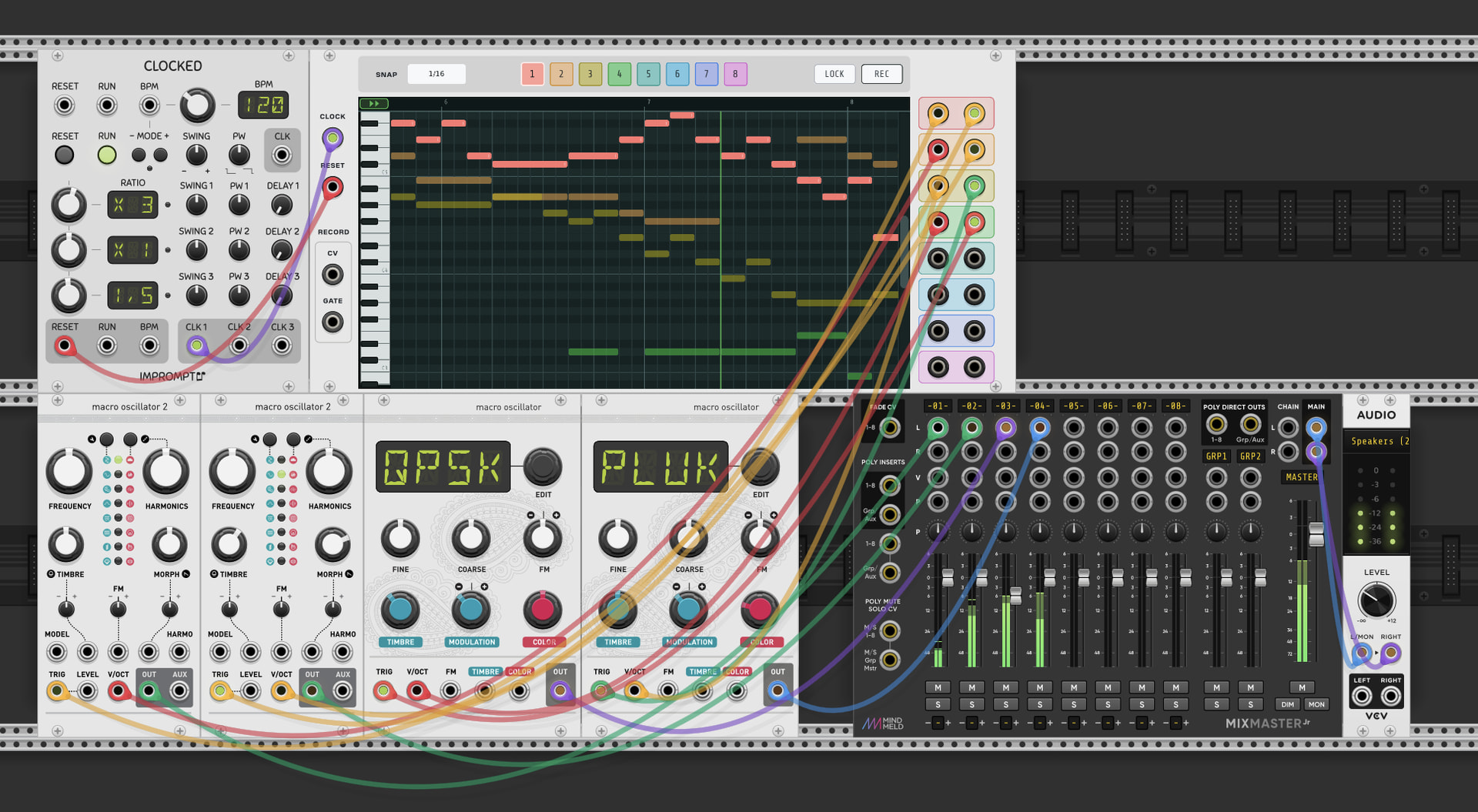
I’ll post a reminder once it’s available in the VCV Rack library. 
Here are a few additional details:
- supports scrolling and zooming the interface
- you can preview notes by clicking on the little vertical keyboard
- it supports selecting, moving, quantizing, and deleting multiple notes at once
- it has a lock feature to prevent accidental interactions
- there’s a “chase” button (right above the vertical keyboard) to toggle playback chase
Thanks for letting us know about the high resource consumption - I’ll just have to limit my polyphony… I don’t think I’ve really played with dedicated wavetable modules very much despite me using tons of other wavetable monsters… this one is definitely quite weighty and we can’t wait to hear some audio demos on your channel! Wonder if you were inspired by any of the Piston Honda hardware modules, they have wavetables and I think they have 3 oscillators or was it just 3 sliders for one wave? It’s been several months since I was into it last since I was curious about it and was planning to hopefully add it to a future hardware rack one day
Always great to have new free modules, this is a must have module for practically everyone here! I might have more options since buying Entrian but it’s great to have a simplistic workflow to easily manage longer compositions… it takes the daw out of the equation you can just work with VCV standalone and compose whole tracks! How much polyphony is it capable of and what are the pattern lengths/totals in case it can hold a bunch of patterns with many bars? And can it send notes to multiple separate oscillators simultaneously or is it only one polyphonic output?
Polyphony: Eight tracks, each with its own V/OCT + GATE pair, and each pair is polyphonic up to 16 channels. That’s 128 simultaneous notes at maximum. You don’t set the polyphony directly. Instead, each track’s channel count is derived from what you’ve written, meaning it equals the largest number of notes overlapping anywhere on that track. A monophonic bass line reports 1 channel, a six-note pad reports 6, so downstream modules see an dynamic count instead of a fixed 16.
Pattern size: 2048 notes total across all eight tracks. Loop length is set from the ruler marker or the context menu, with presets at 1, 2, 4, 8 and 16 bars; you can drag the marker to any whole bar beyond that. Individual notes can be up to 65535 steps long. One step is a sixteenth note.
Multiple patterns: No, there’s one pattern per module instance, with no pattern bank or slot switching. For multiple patterns you’d use multiple instances of the module.
Multiple oscillators: Yes, eight separate destinations. The eight output pairs are fully independent, so you can drive eight different oscillators or voices at once, and each one can be polyphonic on top of that.
Hope that clarifies things! If you look closely at the screen capture that I posted, you can see that I’m driving four different polyphonic oscillators. I’ll post a video of that in action within the hour.
Enjoy!
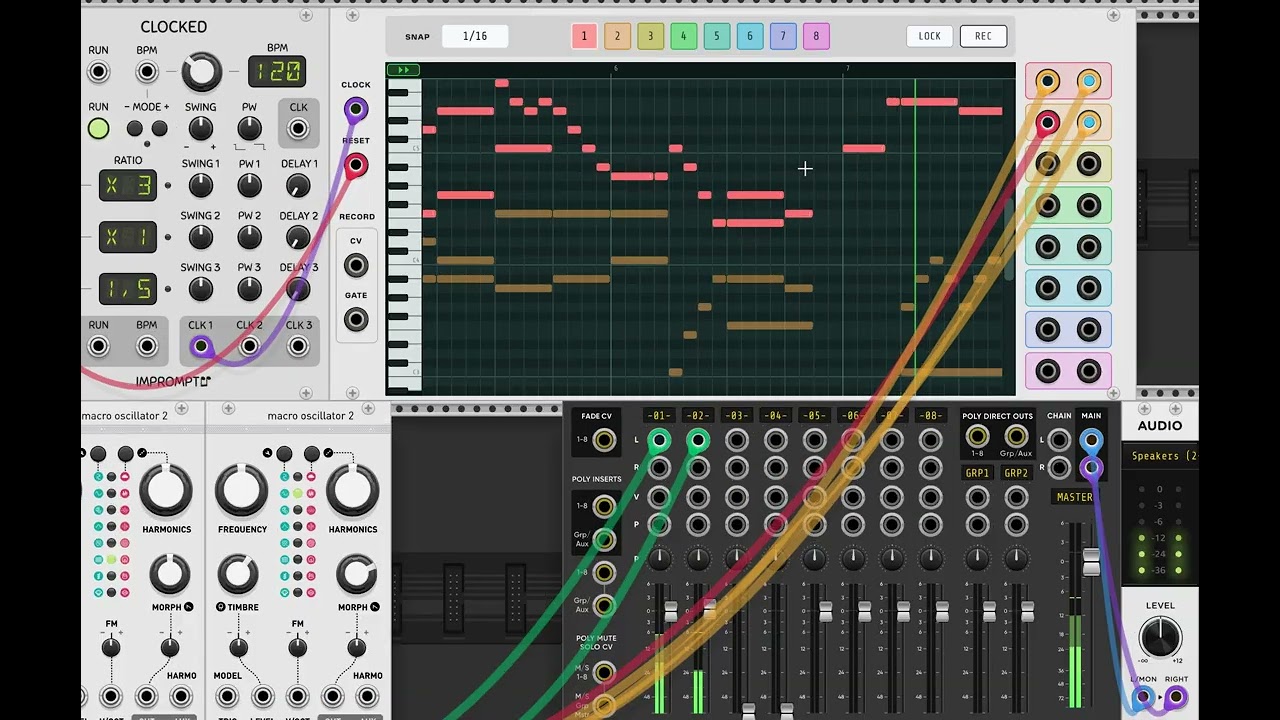
Nice new module!
just one question, I suppose the outs are V/oct and gate,
imho it needs at least velocity too to work with midi files,
would it be possoble to add velocity outs?
Yes, I can do that. That feature will likely launch after the initial release. Another missing feature might be a run input, since otherwise it’s a bit challenging to control the start time. Oh, and I should probably label the outputs. 
Quick update on WYRM. I’ve created a new version which implements some nice new features requested by @Alphagem-O ,
- It’s easier to select the modulation destination in the mod matrix
- Knobs can be double-clicked to reset them to their default position
- The effects interface now supports colored patch cables
- Both envelope generators now visualize their playback positions
- A global pan has been added to the output tab
Thanks!!
Ok, thanks! Can’t wait to find it in the library! It’d definitely work with my other plugins too, but I’d have to do some additional setup if I wanted to say, put in a Swam Saxophone cause that’s basically treated like an oscillator that needs a vca except it controls midi expression instead… could definitely be great with drums too, even if there’s other options I have available too. Keep us posted with further audio demos while we wait!
I have been thinking a little bit about having 4 different vc outputs per note, and showing them when the note is selected, like this:
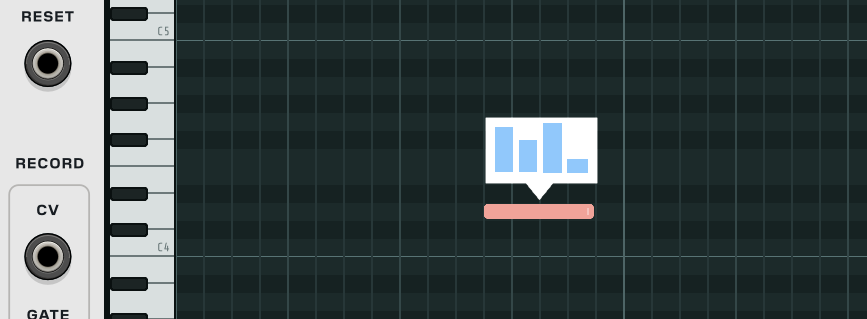
When importing MIDI files, velocity would be represented in the first of the four CV outputs.
But, I intend to release the piano roll module as-is, then adapt if users start requesting features. In other words, I’d like to make sure that there’s demand first.
Love that idea for more cv outs, and the picture looks cool for quick adjustments. Is that 0-10v? I have been wondering if the piano roll is mouse friendly. Like can I select a few notes, copy and paste those and move them up and down in pitch together with same selecting tools? Can I nudge notes off grid ? Could I select the cv widget and copy it to another note or all notes? Questions questions!!
I made a video that should answer your questions!
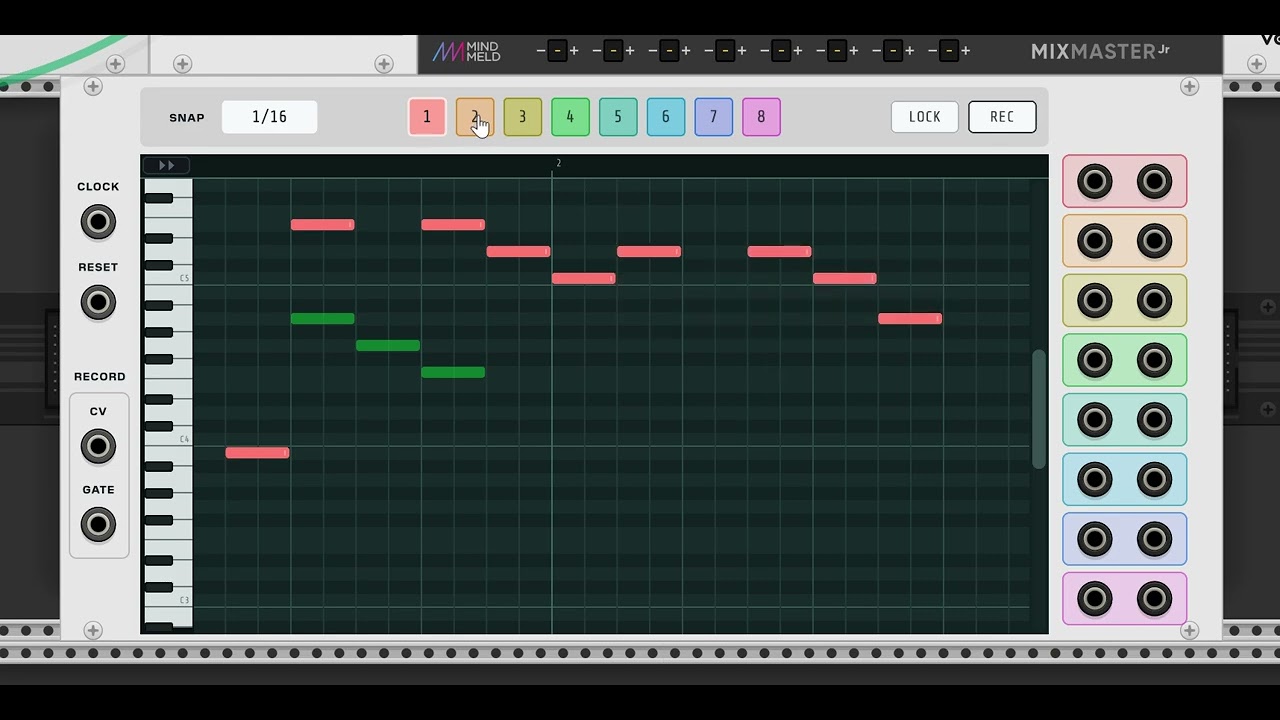
If you can’t view the video, try this link: https://www.youtube.com/watch?v=0iCKiOF3ZFw
Super cool response, it looks super fun already for vcv sequencing!
Ooooh this looks super fun. For me I do prefer scale highlighting so I can see the relationships between stuff instead of guessing, I think it would be a really cool feature to have (maybe similar to fl studio where u can change the background highlighting to be the scale) but also I notice a ton of piano rolls have the ability to preview the note just placed down (eg fl studio or ableton where when u click a note and it plays it so u can audition stuff easily). Nevertheless, this is a super cool new thing I can’t wait to test out. Tysm !!
I hadn’t even thought of that! I haven’t used a piano roll for actual composition for years, so I’m behind on my “piano roll technology” :-).. but that’s a very great idea, and I’ll try to get it added soon.