Zoxnoxious analog synth VCV Rack demos

I’ll have to play with Stairway, thanks for the reference! I’ve read the Electronotes article, it’s a really good read. Per Tom Wiltshire’s page, the Siel Mono predated the Oberheim as the first pole mixing synth filter. But certainly the Oberheim stuff was more popular and polyphonic.

The Pole Dancer is a bit unique in that it decouples the filter from the filter mode. I’d think this would be easy to do for other VCV Rack filter modules, I just haven’t seen it. It also would be difficult in eurorack to give that level of control. I’ve got ideas on how it could get close in hardware eurorack but it isn’t as, uh, “flexible” as the Pole Dancer.

1 Like

That will save someone a google.

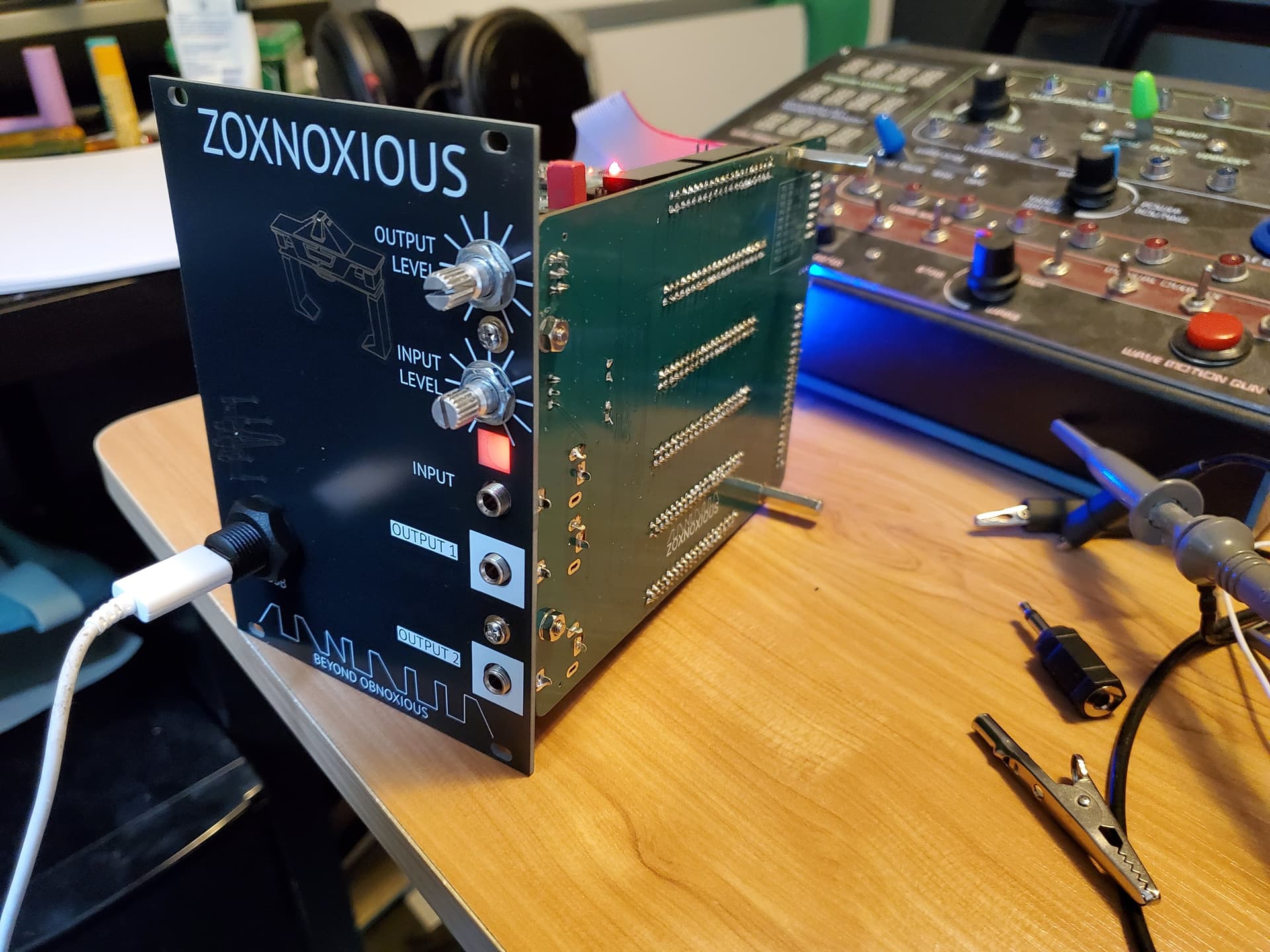
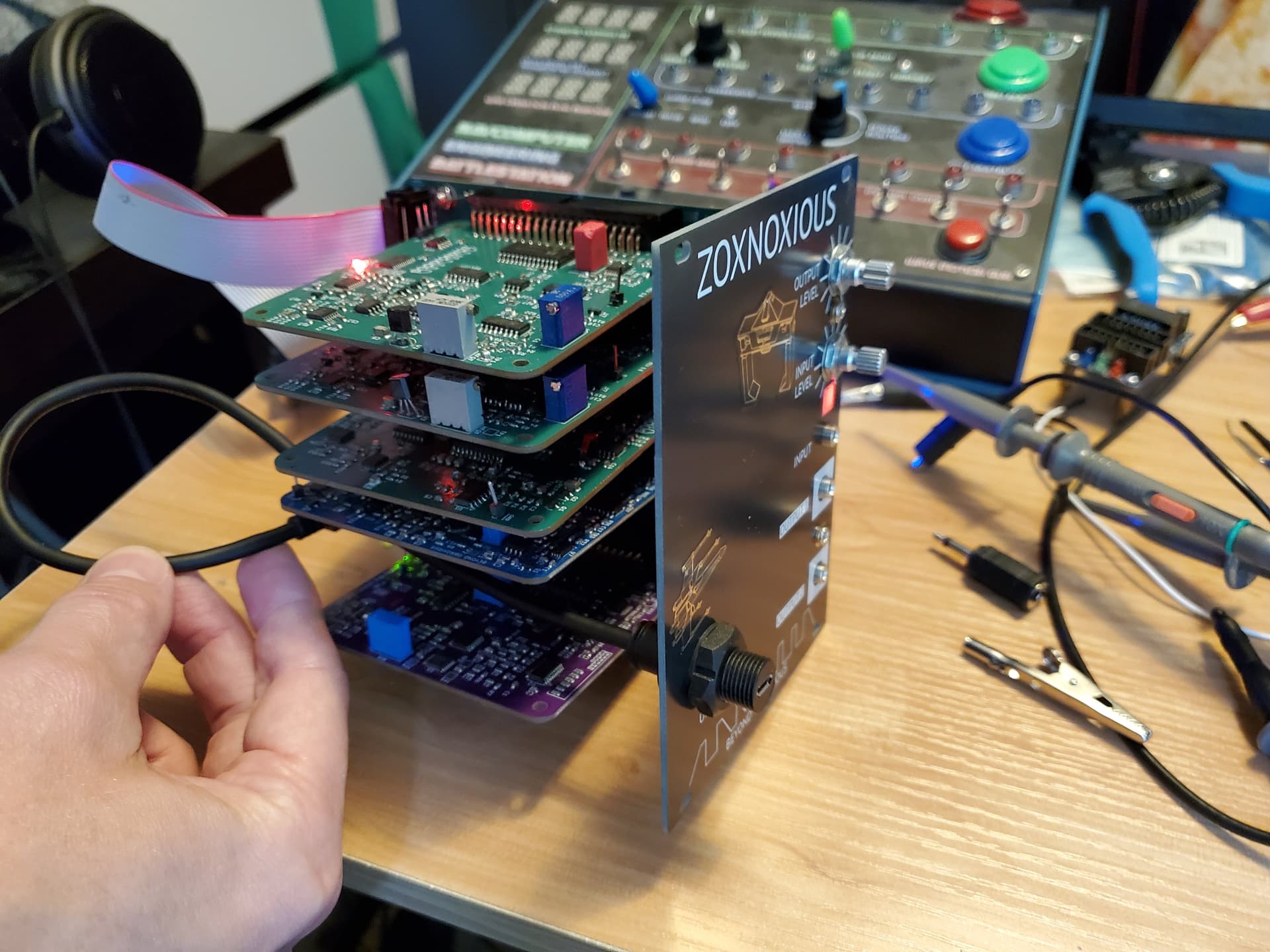
After having just a pile of circuit boards for something like 3+ years, I finally gave this synth a front panel. I mean, a physical front panel, not a virtual VCV panel. Not terribly exciting front panel-wise but it moves the project along. In adding a front panel I re-designed the backplane to shrink it a bit to make it more eurorack friendly. Backplane still holds six voice cards, same as ever. Not much for user feedback on the panel itself other than an LED which shines through the panel. Added graphics for an X-Wing battling Recognizer. Probably should have added a Disney lawyer to the battle.

The debate begins for what to do for the next project. Sound Semiconductor just released a BBD chip, it’d be great to add a delay/flange voice card to the Zoxnoxious synth. Really tempted to try that chip out. I’ve also got a half dozen Yamaha FM chips I need to make use of. Getting chip tune FM sounds would be a new direction versus the analog subtractive stuff I’ve been toying with, and it’d add a bit of polyphony. So I might go that way.

4 Likes

Polyphony for the subtractive analog part?

I’ve got a handful of YM2203 chips, which is a 3-voice FM chip. Used in a number of 1980s video games (Ghosts 'n Goblins, Space Harrier, others). That alone would give some breadth. One could optionally route it through analog filters as well with a couple button clicks, since the architecture is flexible like that. Caveat that it would be a single filter for all voices, which may be ok depending on what you’re doing.

A challenge here might be coming up with a UI that gives full control of the chip. It’s a different paradigm versus the voltage controlled chips I’ve been working with.

1 Like

wow, never heard of that chip! I guess it’s a predecessor of the dreaded “opl3” ad-lib chip?

basically, yeah. It’s much like the YM2149 if that helps, but also has 3 square waves as additional voices. Seems like a bit of an oddball which totally fits the bill for me.

If anyone is overly curious on internals and programming this series of videos from Tyler Klein is a pretty gentle introduction to development of a YM3812 board: YM3812 eurorack module

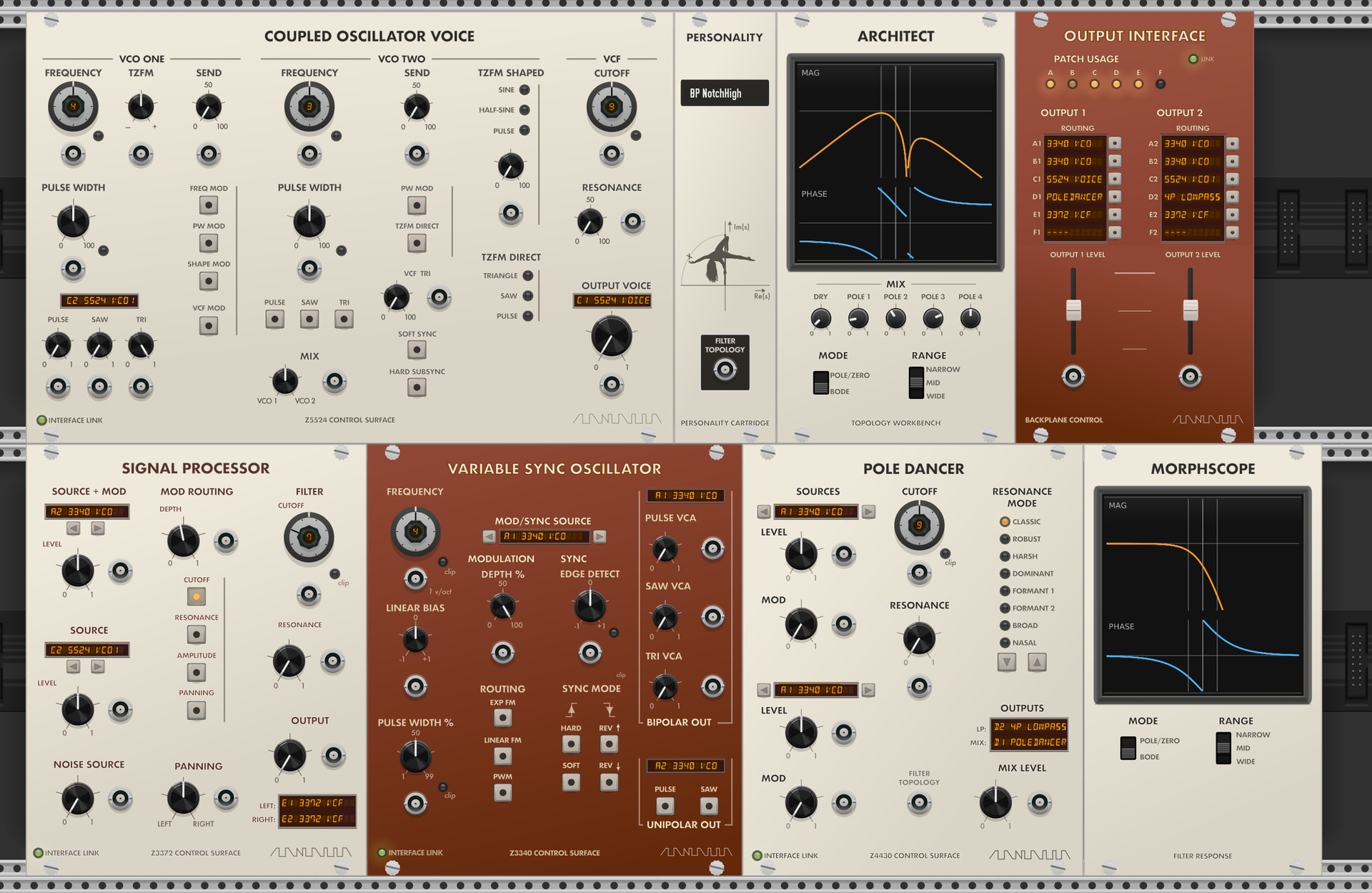
Keeping this thread alive with another progress update. After 4 years it’s well past time to move on from the old Zoxnoxious panels I designed. I’ve started implementing a new visual direction for the Zoxnoxious modules.

The search began by looking at vintage telecom equipment, then pivoted toward nuclear instrumentation modules (NIM). That turned out to be a better fit: NIM has a distinctive scientific instrument look. At the same time, these are still meant to be musical tools, so I’ve tried to keep them recognizable and usable for anyone familiar with Eurorack conventions. Not just Hainbach.

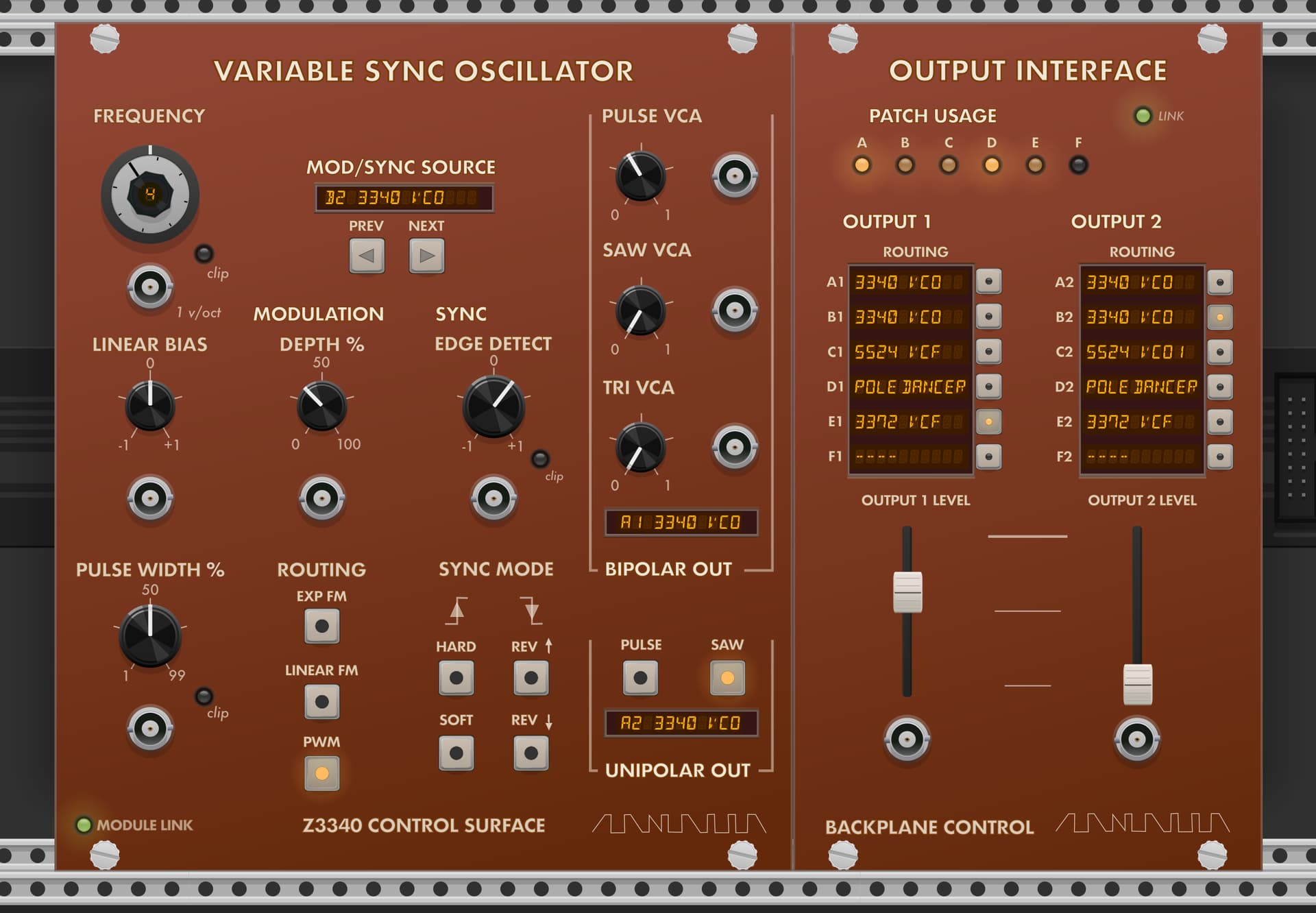
So far, I’ve completed updated panels for the Z3340 VCO and the Output Interface. There are no functional changes. The oscillator still uses a CEM3340 (clone) on the hardware card, takes VCV Rack inputs for control, and includes the full feature set: four sync modes, dual outputs with VCAs, etc. The Output Interface now reads more explicitly as what it is: an interface to external hardware. In addition to routing to a hardware output, the Output Interface shows what voice cards are present in the hardware as well as whether or not their frontend modules are instantiated in Rack.

With these panels come a few new custom visual elements. The BNC-style jacks are purely aesthetic, reinforcing the instrumentation theme. The slotted thumbscrews are borrowed directly from NIM hardware to help signal that this isn’t just another VCV Rack module. The latching push buttons are styled after HP-lab equipment. The custom VCV Rack slider didn’t fit the style, and NIM modules don’t use sliders, so I opted for a standard mixing desk type here.

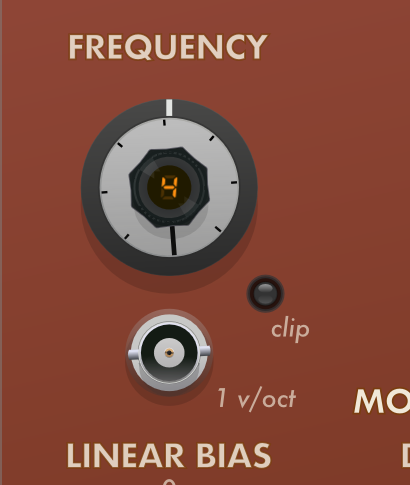
NIM modules have precise control on some functions via a turns-counting dial. This was an interesting challenge. A physical multi-turn dial displays its count mechanically at the top. Here, I’ve replicated that behavior with a 7-segment LED embedded in the knob itself. The display shows the oscillator’s octave, with one full rotation corresponding to one octave step. The precision control is implied in the widget. I added some mouse acceleration so it’s easily usable in Rack. (it’s wildly fun to use - I’d upload an animated gif if I could)

Scroll up in this thread for a reference on where I was coming from. The previous modules do, in fact, look like a “Fisher-Price: My First Oscillator.” And that’s not entirely a criticism. The color-grouped functions and compact layout had some merit. But beyond that very little was working. Almost nothing aligned to a grid, the design language wasn’t consistent, and overall it just didn’t hold together. It’s off to the github dustbin.

Now I’m working through re-skinning the remaining modules in this style. Meanwhile, the Yamaha FM board from earlier posts is still sitting on the backburner, patiently waiting to be tested. Only so many hours in a day. Big thanks to the Rack Discord crowd for putting up with my “does this look ok?” cycle. The feedback has been consistently helpful.

8 Likes

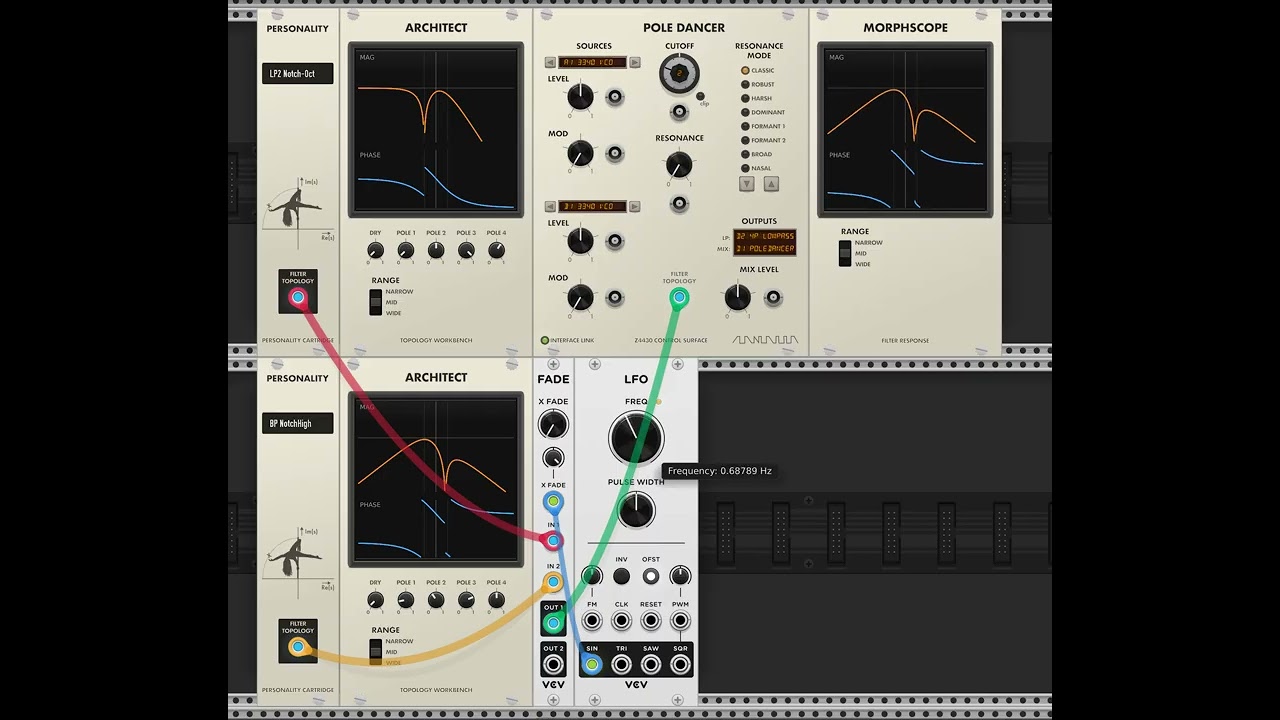
Module reskinning effort is in full effect, and I’m pretty excited about where the Pole Dancer modules are heading. The big missing piece I had was visualization: something to actually show the filter response, phase behavior, and topology morphing that the filter is producing. The work-in-progress does a lot already, and will look a lot better very soon. Here we go, module list with some new additions:

  • Pole Dancer: the filter itself, the workhorse
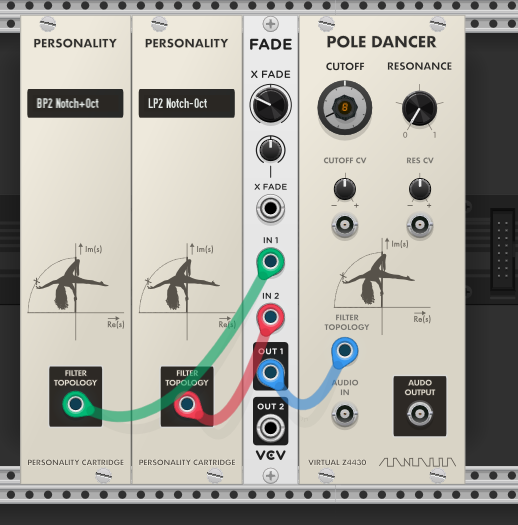
  • Personality: a filter topology cartridge; instantiate one or many and route between them with switches, crossfaders, etc.
  • Architect: Personality expander. A workbench for building and auditioning pole mixes, with frequency + phase response for a single Personality
  • Morphscope: Pole Dancer expander. Shows the actual filter response including topology morphing and resonance behavior

One notable design change: Personality is becoming a preset-oriented module rather than a knob playground. In practice it’s really “give me a 2-pole highpass preset” rather than live tweaking individual pole mixes. So the knobs get moved over to the Architect, the engineer can play with them there.

Both analyzer modules are right-click expanders, and they serve different purposes. Architect and Morphscope are great for giving visual feedback to what the filter is actually doing in real time. No audio in the vid, I’ll do a full demo soon. Just eye candy for now.

2 Likes

A bit of a status update: this DIY analog synth has all new control panels for VCV Rack. I feel they’re strong in design and much more usable than what I had previously.

But that’s for a DIY hardware synth. So, what can I offer for those that don’t want to use a soldering iron, Raspberry Pi, and end up with a very wonky setup?

Big Thing Here: I’ve got a Pole Dancer module that doesn’t require the hardware. It builds on VCV Rack’s Fundamental VCF and does pole mixing, multiple filter modes, and most importantly filter morphing. I’m hoping it makes it to the VCV Rack free library soon; sneak peak on the module here: GitHub - brer-rabbit/zoxnoxious-virtual: Virtual versions of Zoxnoxious hardware modules for VCV Rack · GitHub

This is essentially a Rack version of the Pole Dancer filter, in function. Choose filter modes, setup morph between filter modes, and have at it. Voltage control over filter topology. Coming soon!

4 Likes

I built pre-release binaries for Zoxnoxious modules:

It’s a filter capable of morphing filter response, per posts above. Anyone interested in trying this before it hits the library can download, drop it in their plugin folder. This is Rack-native, no Zoxnoxious hardware required.

Documentation:

1 Like

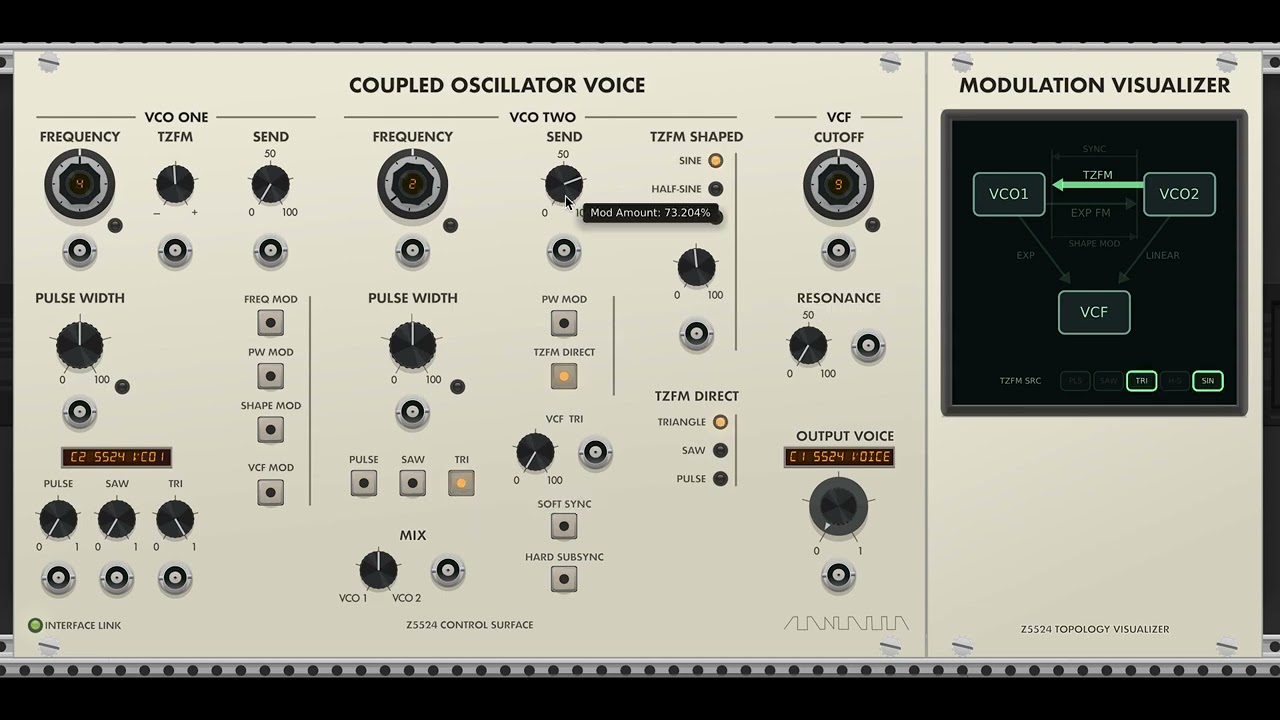
So I developed this dual VCO voice card sometime back. I did a demo of it way back in Nov 2023. But really- understanding the full coupling between the VCOs and the modulations that each VCO can provide always seemed like a bit much. So here I’ve got an expander module for the dual VCO voice panel, one that shows modulation options and highlights active paths. I think this’ll be pretty cool in using the voice card. No audio here- but the visuals do the work.

1 Like