This looks a dystopian machine from a sci fi film ,is cool.
Exactly Bret, that’s what bothers me. It looks like a printing error. But who am I? These are just my thoughts.
nothing bothers me about the design i thought it looked dope when i first saw it. i can see why some people would be bothered by the logo being cut off but i thought it looked cool and seemed to make sense for the module 
2 Likes
I think it looks great. Hadn’t checked this thread for a while and wow, hundreds of posts!
I have a suggestion: could Impulse have an audio input as well as a trigger? I like to use my own impulses to excite resonators (see Alloy for example, or Anuli/Rings or Wallenda).
I’m slightly obsessed with this technique at the moment! 
I’m trying to picture this in my head. Let me think out loud about this. I would add an additional excitation source called “audio” and an input in the “inputs” section called “Audio”. And when the impulse source is read, then the audio at the input is sampled and used for the excitation?
Yes! I can definitely do that! In addition, I can feed the audio back into the karplus strong delay via the “bleed” feature. Brilliant! @VirtualModular I owe you a beer. This is a really amazing idea. I’ll implement this tomorrow and report back.
6 Likes
No, I owe you a beer for developing awesome free modules. Beers all round! 
I’m not sure the input would have to be sampled, the idea is to feed it directly into the resonator. I’m guessing the module is a tuned delay line, and uses a burst of noise to excite it? (Or in code, this might just be a random value). Let me know if it’s not that simple! I like to feed samples through resonators or live guitar. You can also use a noise burst, but use other effects before the resonator to generate different textures, like delays and flangers.
1 Like
Ah, I think I may have misunderstood! Let me make sure I’ve got this right:
You’re suggesting the audio input feeds continuously into the resonator - no trigger required. So the Karplus Strong delay line essentially becomes a tuned resonant filter that audio passes through, ringing at whatever pitch is set. Similar to how you’d use Rings or Anuli as an audio effect rather than a triggered voice. (But triggering would still be possible, I assume?)
Is that what you’re after? I’ll implement that and see what it sounds like while I’m waiting for your response.
That looks amazing, great stuff 
6 Likes
Yep, exactly right!
I like to use external audio instead of a trigger, thanks.
1 Like
Ok, I have it working, but I have a few questions. Impulse can be polyphonic, which raises a question: Should the audio input simply route to the first channel’s resonator? If we route the audio to each channel’s resonator, it doesn’t sound great – just really loud.
Yep with polyphony, each channel of the input should map to the corresponding channel of the resonator, if that makes sense? Then you can excite each channel individually. That’s what I do with Wallenda, Anuli etc. Thanks for clarifying.
You bet! This is done, but it might take a little bit of time to roll out. I might wait until the new module (Circuit Bender) is ready so I can “batch” my annoying, endless update requests to the VCV Rack team.
Much of the Circuit Bender front panel artwork was generated by Nano Banana Pro. You can see original generated design here.
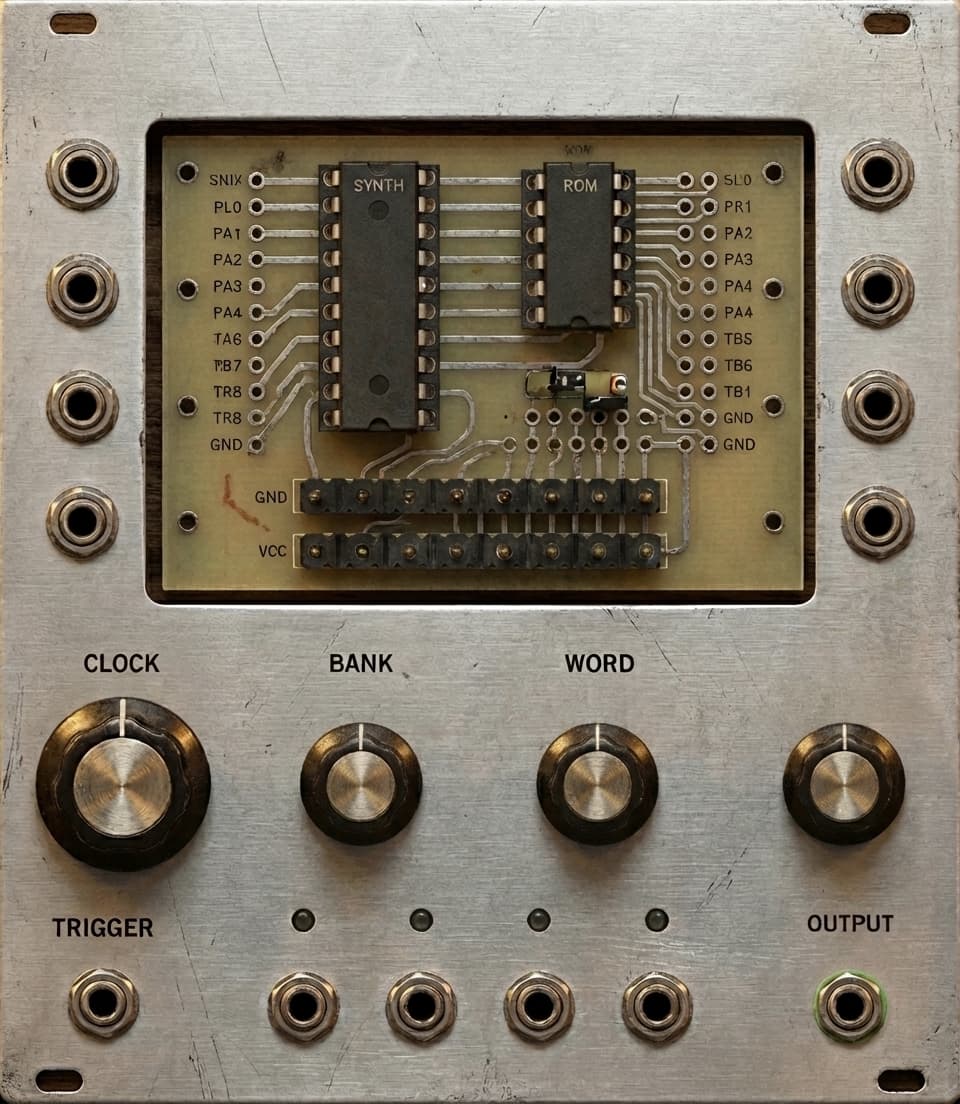
To get most of the positioning and design correct, I provided nano banana with a early “basic” front panel screen capture using .. inkscape? Honestly, I can’t recall.
I then asked Nano Banana to remove a lot of the components, pulled the background into Krita, and built from there. Here was the front panel after asking nano banana to remove all labels, ports, and knobs:

Here’s the design in Krita without the background:
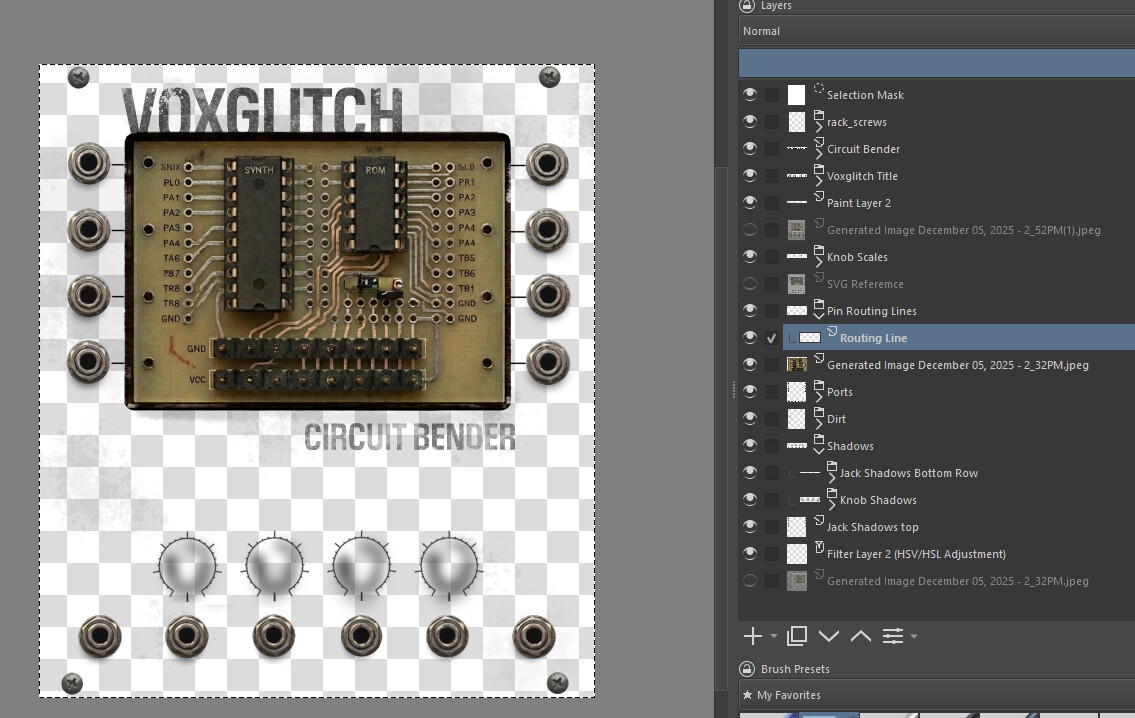
And just for good measure, here are the SVG layers:
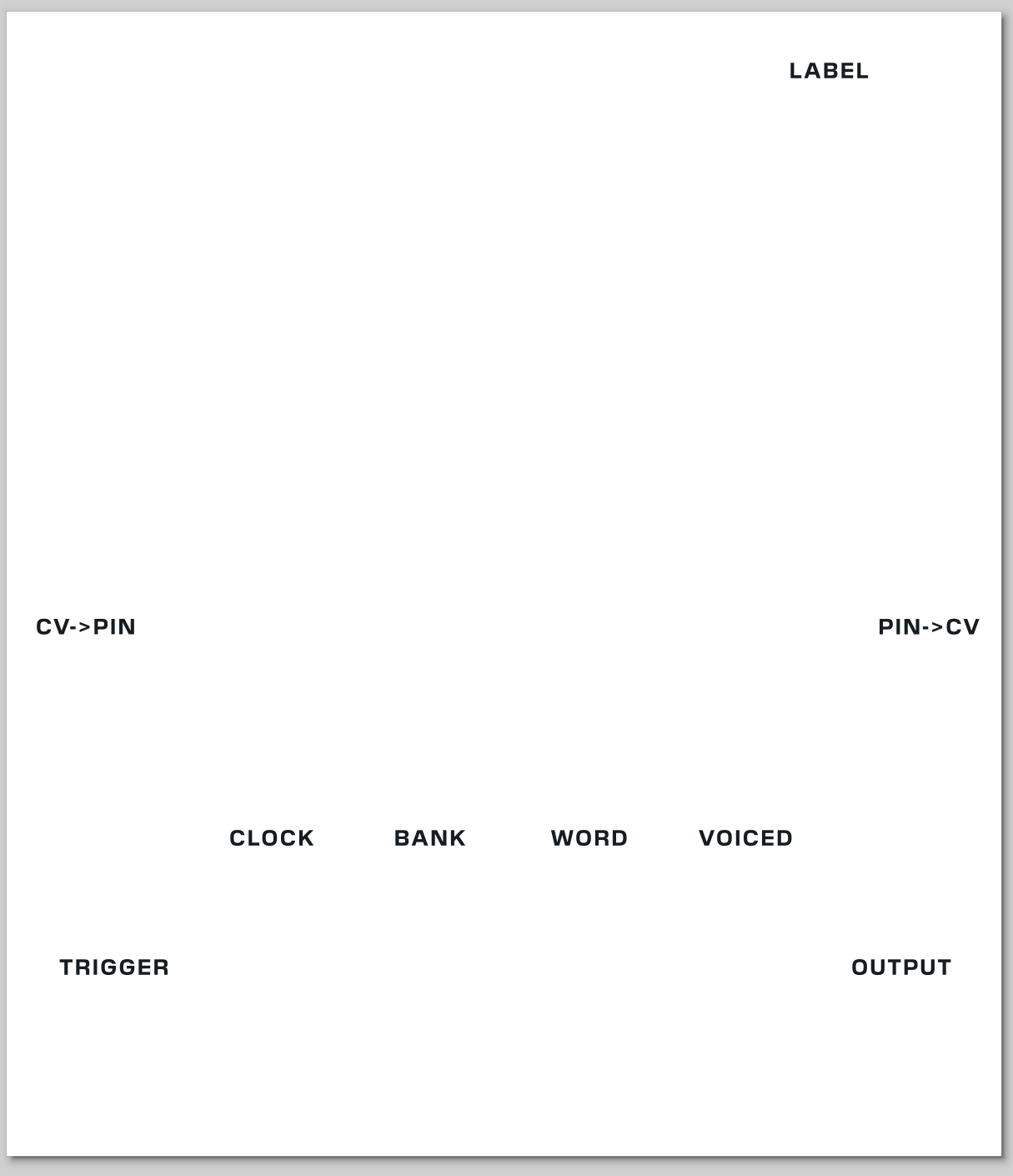
Typography:
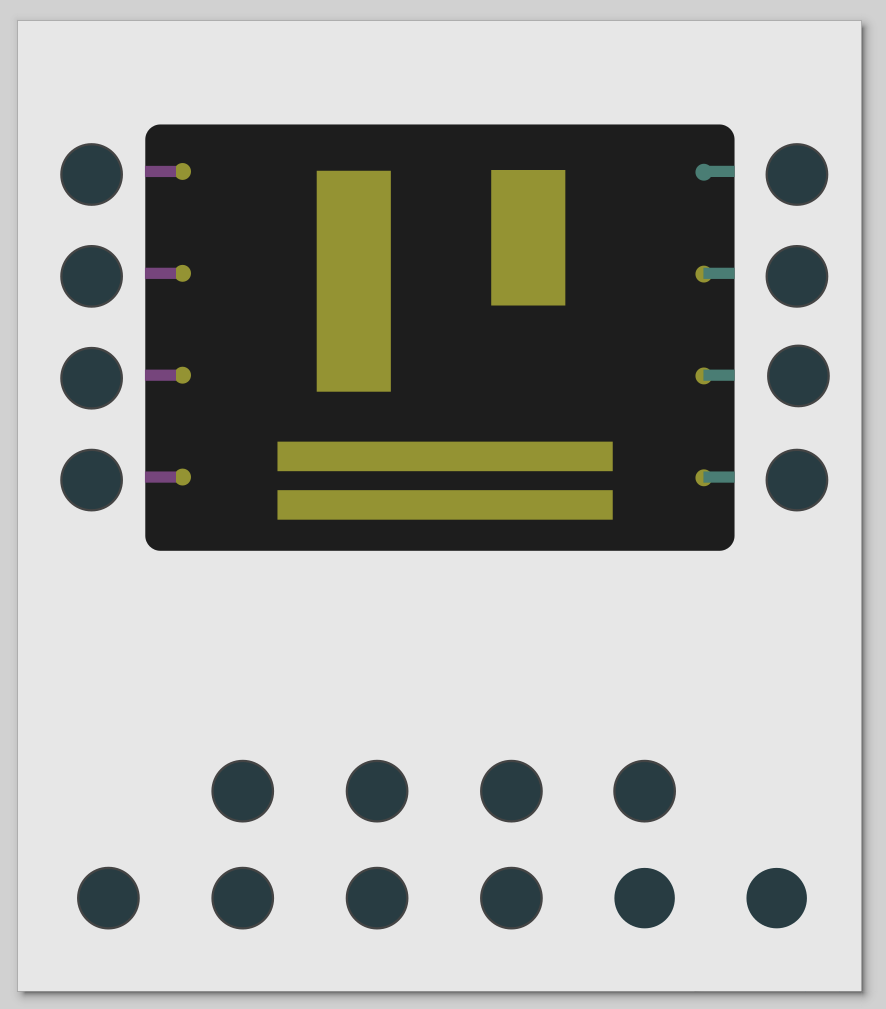
And the panel with the widget position placeholders:
Fun fact:
The Voxglitch hardware modules that I launched long ago were the first to use oval mounting holes. Because there weren’t a lot of eurorack manufacturers at that time, and Analog Systems had different mounting hole locations, I created the mounting holes to support either the Doepfer or Analog Systems. It’s fun to see my mounting hole concept being generated by AI!
9 Likes
You see, now, this is a great example of using AI as just another tool in the box. It helped you create something, it didn’t do everything for you, it still required your creative input and effort… But lets not get into that discussion here. 
I think the result is wonderful.
I really feel like this should be part of the eurorack spec, modules with precise circular holes are sometimes very hard to mount. My custom case has threaded inserts, not sliding nuts, but every custom case is going to have some movement, not to mention wood expansion and contraction due to environment. I absolutely hate cross threading a knurlie because a module with circular holes won’t quite line up perfectly, Even on my Arturia RackBrutes I get this sometimes!
One downfall to the oval holes was that the mounting screws tended to wear down the metal around the oval hole. Perhaps this was due to the fact that the force (pressure) of the screws weren’t evenly distributed.
Yeah I can understand that, some folks are concerned about rack-rash.
I don’t care, for me that means a module has been used, like a patina, part of its character.
But there is a solution for that too, you can get tiny plastic washers that go on the screws to prevent them wearing the module panel.
1 Like
I did not know you made hardware by the way, be really interested in your thoughts on how easy it is these days to produce a commercial hardware module, but maybe that’s for a different thread/forum…

evolution
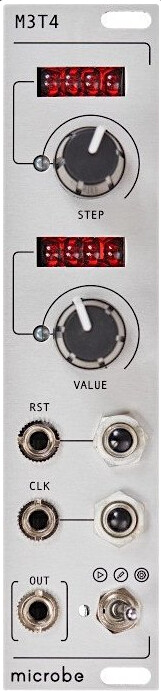
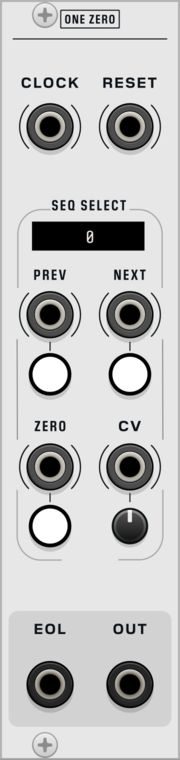
1 Like
If you want to start a thread, I’ll contribute, but honestly it’s been a while since I made hardware, and I might not know what’s changed. AI wasn’t around back then. 
After leaving VCV for a couple of months, I always have to re-learn a few modules. So I’m sorry for the historic, (almost) off-topic question.
How is WavBank MC meant to be polyphonic? It is not designed to play multiple WAVs at the same time on receiving a polyphonic trigger, is it?
And the other WaveBank is also single-WAV module, right?
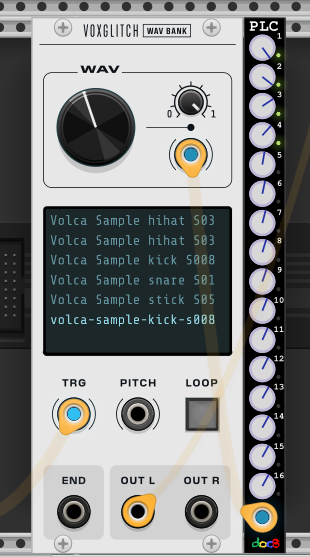
Sorry, updated answer. Wavebank MC is multi-channel, not polyphonic. It’s a slightly weird module in that respect. It will only play one audio file at a time, but that audio file can have multiple channels. Most audio files that we are accustomed to only have two channels: left and right, but that’s not a limitation. An audio file can have multiple channels. An example of that might be surround sound.
I hope that clears it up!
2 Likes