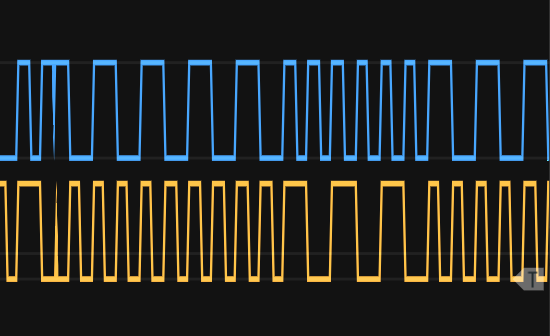
Yep, but how do you fit a 4*4 mod matrix of the LPF residual to cutoff in the unit?
EDIT:  ok, so the ZDF self modulation might be a bit hard.
Yep, but how do you fit a 4*4 mod matrix of the LPF residual to cutoff in the unit?
EDIT: ok, so the ZDF self modulation might be a bit hard.
No, mine was unrelated 
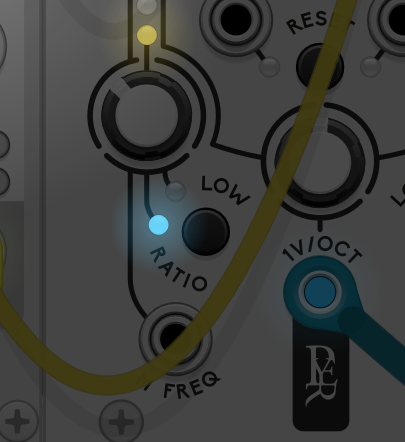
when I turn the knob, it switches through the ratios. And usually, cv inputs turn knobs for me, but this one keeps sweeping through the pitch
I’m having fun testing Dark Energy, it’s a very nice module. I know I sound demanding but it’s only because I like it, and want it to “be the best it can be”. So you know the deal; you are free to ignore absolutely everything I say
I would love a slider-setting in the context menu, where I can change the slope of the internal decay envelope, between linear (as now) and exponential. That would allow me to make some nice percussive basses that I like, without having to use external envelopes.
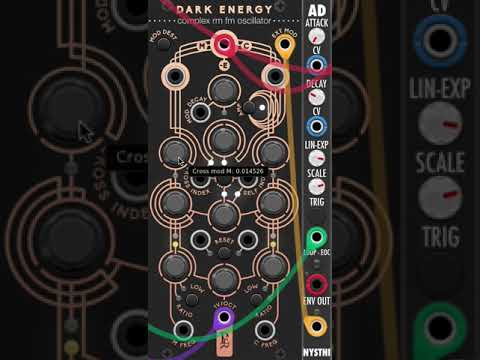
Ah, I see what you mean. According to the manual that’s deliberate. Only the knob is quantized to semitones, not the frequency CV input. Presumably to use the CV input for external FM.
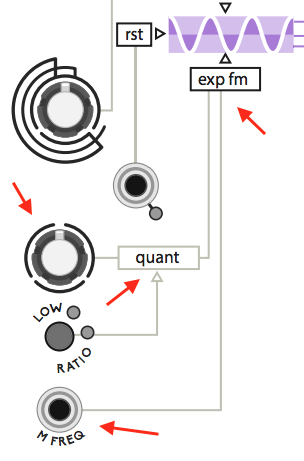
shouldn’t it just be exponential all the time?
Well, I would argue that if there’s no choice, then yes, exponential would be most useful. But a sliding choice between linear and exponential might be even better.
Thank you guys, new module is full of amazing features and sound of course!

Hi Friends, thanks for your kind messages!
@LarsBjerregaard thanks for your suggestions for the self and crposs mod, you cant modulate the two sides withc two different cv but:
about having an exponential right click fader. Since the start of the project we tend to limit ourselves to things that could have an harware equivalent… it’s just a handy internal modulator. We’ll think about it
about the ratio quantization, yes, the freq mod input is free for ring mod synthesis purposes: try to set a nice sounding ratio with teh knob and send a quick envelope and listen to E, you will understand the idea
about DC offset, sure it can and should be done (not for lfo mode) tho we have to check if it still allows for E’s ring mod synthesis because this is technique very “liberal” with the -/+5V concept 
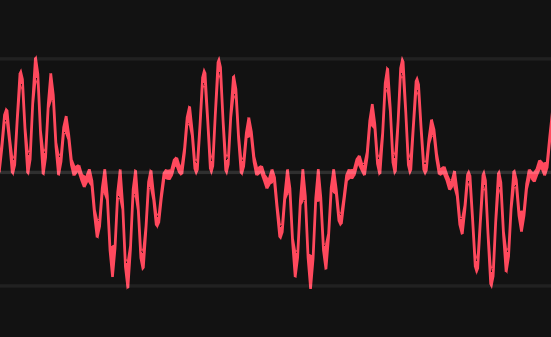
My first real play with Dark Energy. Liking it…

Really loving Dark Energy tonight, I took one of JakoJako’s suggestions about feeling uninspired and cracked open a manual and just worked through it.
Wanted to flag a silly typo - “muplitpies” for multiplies. It’s such a beautiful manual! Thanks for making these modules.
I have to say, it’s a very fun knob twiddler. There’re just so many sounds in there, and the way they interact with each other is so organic and nice.
It’s a great match for vcv rack - the ability to move a knob, ctrl-z to move it back, ctrl-shift-z to return, double-click to suddenly re-init the parameter - what the computer interface lacks in physical knob twiddling, with vcv you get some really amazing things back to make up for it in terms of quick changes and repeatability.
I feel like the Dark Energy module really makes me want to take advantage of all of those different possibilities, pushing it into different dangerous territories and then quickly bringing it back in a controlled way. A very fun and musical module.
You have no idea how happy I am to revive this old tradition: SOON IN GEODESICS with @marc_boule
something’s coming?! and it’s making dance moves?!
Tease!
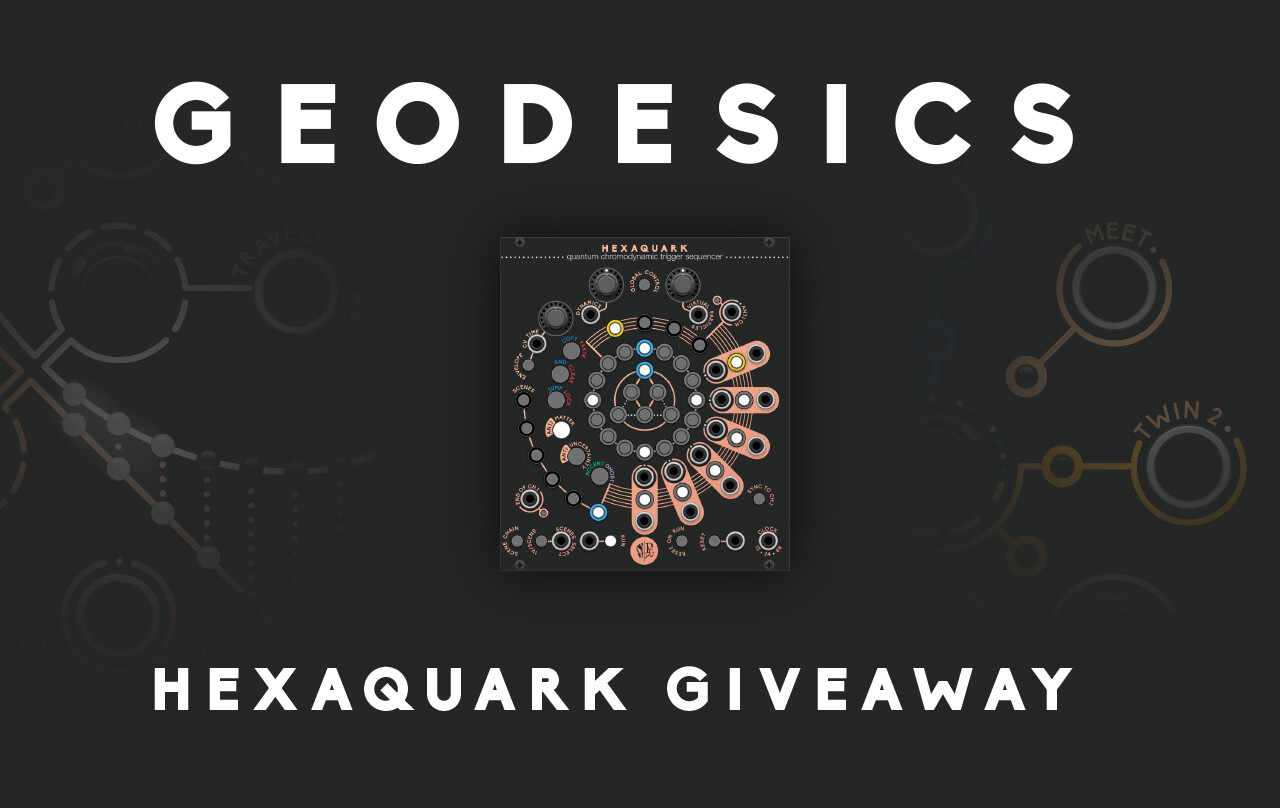
To celebrate our future new free Geodesics release, and to trigger the creative minds of the VCV human user community, we wanted to challenge you with a very important question that sits at the center of our new module. The most creative answer will be rewarded by an Hexaquark license!
“Consider two twin composers, each playing the same electronic music piece on identical modular synths. One of them boards a spacecraft for a journey close to light speed. When the twin returns to Earth, will the two music pieces still be in sync? If not, by how many beats would it be off?
The spacecraft follows a circular trajectory through space; it accelerates at 1g from take-off until it reaches cruise speed of 80% of light speed and decelerates at –1g before landing. The journey lasts exactly 10 years according to Earth’s records. Both musical pieces start simultaneously at the moment of launch, and both modular systems play at 120 bpm.”
We noticed you humans have just found out about AI since our last visit (ok… no spoilers!). For this reason, the level of creativity will be the main element of reward. Let yourself go! If you’re not an astrophysicist, you can release your inner sci-fi writer.
The prize is a lifetime license for Geodesics Vultiverse Hexaquark (thank you Leo!). Answers can be posted as comments on the Facebook post or in the VCV forum thread. Results will be announced in one week.
I already have Hexaquark, so don’t add me to the list, but I thought I’d answer. Somewhere in the cobwebs of my memory are my modern physics class problems related to time, relativity, and objects approaching the speed of light, but I’m too lazy (and fuzzy) to try to solve it that way. Instead I’m remembering years of tape decks, time codes, smpte, iConnectMidi4+, loops before warp algorithms, and the insanity of trying to get anything to reliably get and stay in sync. And all of this in non-relativistic frames of reference. Sure, today it’s not such a big problem, but your quiz has triggered some type of sync PTSD, so I would say it’s highly unlikely they would stay in sync.
Hexquark-license owner here, too. So, just because of the art.
Their music is completely in sync because it transcends time and space. So, ChatGPT’s answer of 250,560,000 beats of discrepancy between alien musician and earthling is completely off the mark.
Somewhat of a joke answer, but I couldn’t resist:
Completely out of sync. But it was that way from the start, because they forgot to patch any reset signals 
As I know that the two composers both play an extended cover version of John Cages 4’33" they both will be in sync for ever and ever and ever and …