This one is a mess to be honest, but uses a kind of DIY physical modelling approach for most of the sounds which is basically pinging filters and resonators. I thought it’s an interesting idea, even though this isn’t the best example of it.
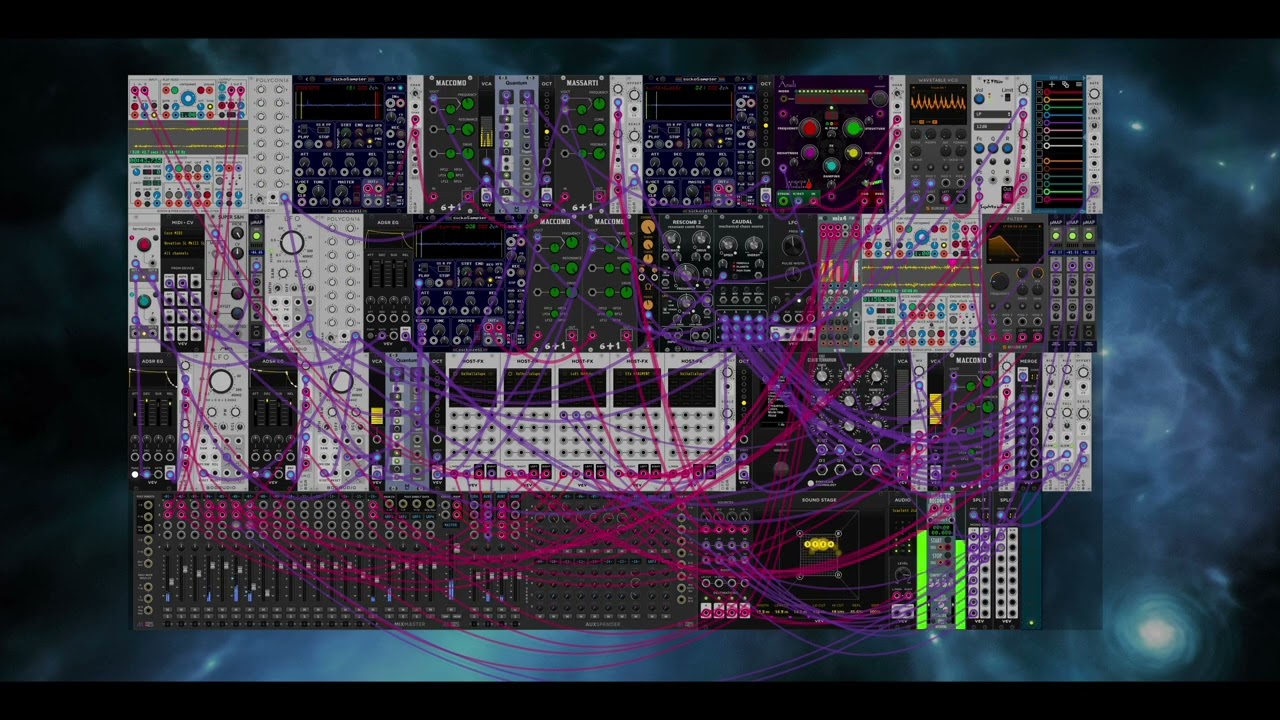
This one is a mess to be honest, but uses a kind of DIY physical modelling approach for most of the sounds which is basically pinging filters and resonators. I thought it’s an interesting idea, even though this isn’t the best example of it.
I have spent a lot of time looking for the best available filter in VCV for pinging. Until recently I had settled on the Vult Unstabile.
But ever since I created the Venom Multimode Filter, that has become my go to filter for pinging. It is an absolute beast, yet will never self oscillate unless feedback is applied. To get the widest range between short resonant clicks and long ringing pings, set the resonance to full, and then apply more and more feedback until it starts to self-oscillate. Then back off the feedback until it no longer self-oscillates. The optimal feedback level is dependent on the chosen filter slope. The higher the slope, the less feedback you want.
Now simply ping away. Adjust the resonance to dial in the sound you want. The entire resonance range is useful. It has a huge range both in terms of frequency, and ping character. Also play around with the gain. Set it just above zero to get a delicate ping, or pump up the gain for some delicious saturation. Currently the gain is capped at 2, but I have an updated version that I plan to submit to the library that goes up to 10.
My favorite setup is to use the 24 dB/Octave slope, with feedback set to ~0.223
Lastly you can play around with the Spread, which applies different cutoff to the left and right channels. Set the Spread mono mode to subtractive, and patch only the left input and the left LP output. The filter subtracts the right from the left to effectively give a band pass filter with two resonant peaks - very satisfying! This is basically the technique used by Rob Hordijk in his Twin Peaks filter, except I believe he used a ladder filter, whereas the Venom filter is a digital implementation of a state variable filter. It works just as well with BP and HP outputs, with slight differences in character.
Have to say I’m disappointed it doesn’t go to 11! That reminds me, I need to watch the new Spinal Tap film.
I did see your thread on that filter, and it was on my list to try. It works really well! The spread control is a nice feature, I actually used two copies of the same filter tuned slightly differently in that piece, so it’s exactly the same idea but you’ve built it in. Nice work! One of the things I like to do is process field recordings through resonant filters, that works well too. It makes a very similar sound to a vocoder (which would make sense, because they’re basically filter banks).
Is it out already? If so… I need to watch it as well.
Yep, came out last month I think. I’ll probably wait until it’s available on television, should be on Sky Store soon in the UK (not sure where you’re based but we seem to get films fairly soon after they’ve been in the cinema).
It’s got mixed reviews from the critics, but fans are mainly saying if you liked the original then you’ll enjoy it.
Thanks, I’ll watch it soon, I hope 
Super beautiful!! I love this wobbly water sound scape! I really need to fool around with pinging filters more!
I noticed that on my laptop speaker it sounds like some sounds are coming from further away then me speakers are 
Did you use a special stereo effect for this?
I remember that a looooong time ago I used one VST which could create this kind of effect. So that the stereo field sounds wider then the physical placement of the speakers should allow it. But I completely forgot what the name was 
Thanks, yes. Secret pro trick… (which is obviously not very secret now!) VCV Sound Stage.
I’m glad someone picked up on this, I think it’s amazing for spatialisation but you’re the first person to comment! It’s a premium one but well worth the money. It enables you to change room size in three dimensions, so you’ve got height, width and length. These don’t have CV inputs but I like to modulate them using Stoermelder Map, which produces a really psychedelic effect where it shifts around your head in an unusual way, especially with headphones.
I ran most of the elements through this separately and recorded the parts to disk, then tidied it up in Reaper. Glad you liked it!
I was sitting in front of my laptop and was listening to your patch first while doing other things and just suddenly realised that one of the sounds is coming from about 50cm to the right of my laptop wtf… And then I remembered: hey, I used that kind of effect once!
VCV Sound Stage is the culprit !!! aha! That’s one module I wanted to check out already for quite some time but now I have an even better reason then just being curious! (I’m even MORE curious now… )
I will also check your patch again with headphones! thanks so much for the answer AND the inspiration!
No problem, thanks for listening. I always thought this worked better with headphones but I tried it on laptop speakers too and I see what you mean.
I’m wondering what the VST plugin is now!
This is at least 15 years ago … I think what it did was, apart from panning the audio signal, it was also introducing a certain amount of delay and frequencies (on both R and L) that made the sound seam to appear from outside of the speakers stereo field. But I think Sound Stage already does that.
I just searched a bit but could not find the plug-in but I think the effect is described in this article here: it’s the second one that I mean “Polar Exploration”
if I find the VST I’ll let you know. I think it was super simple and literally just did ONE thing aka widening the stereo to an extreme setting.
Funnily enough I was doubting my memory a lot before finding that article from above about if I REALLY had a VST like that or if my brain was just making things up. Again: about 15 years ago
Or maybe it had to do with something like that:
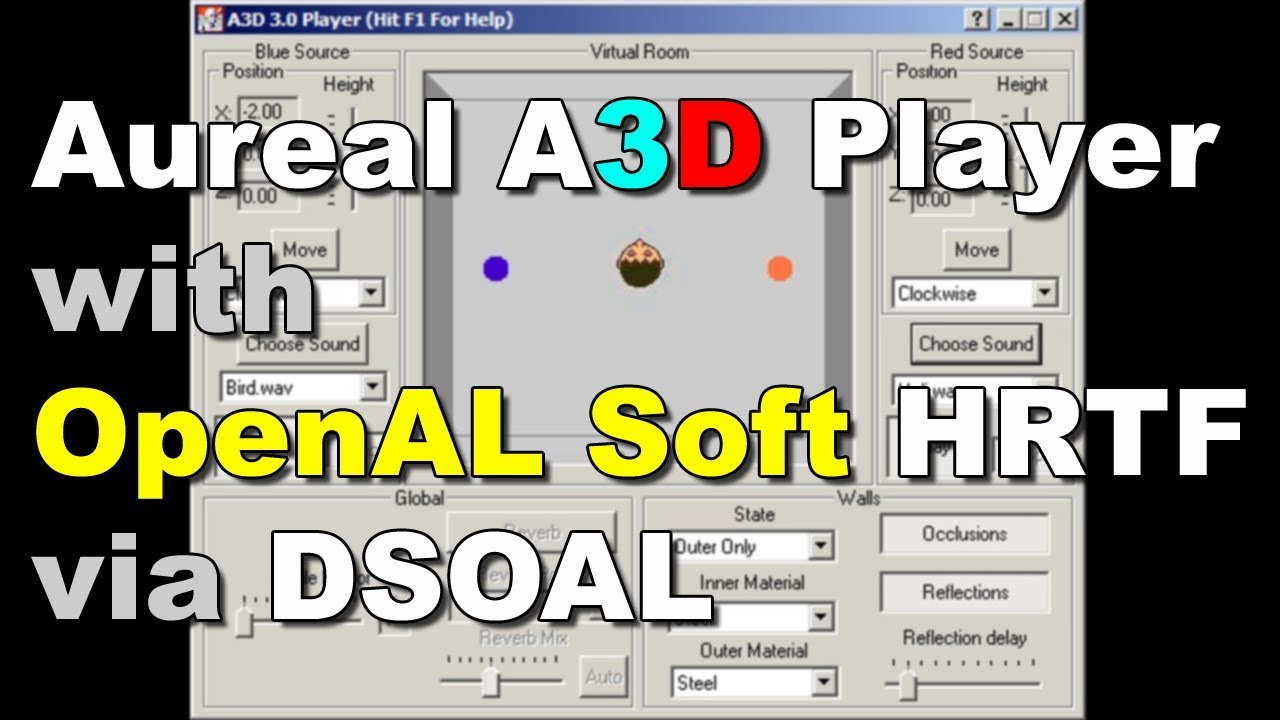
that wasn’t the plugin but I think it had similar a aesthetic
But I think this is probably anyhow related to Sound Stage again
Talking about warped spatial effects, you must try the 4ms Spatializer, nutty stereo effects, ear hole weirdness. It’s weird with low end and high end
@cothiele thanks, that’s really interesting. Guessing it’s simulating the same effect as binaural recording. That’s something I use as well, but I moved house earlier this year and can’t find my binaural mics! 
@cubistguitar yeah I saw a video somewhere on that, didn’t think it was in the library yet. It did sound great.
I love a really wide stereo image, so all these techniques are good.
Latest effort - finally a tutorial on polyphonic effects. I think I’ve been threatening to make this for about three years!
Still one of my favourite things to do in VCV.

Rough and ready one today, a quick demo of @jeremy’s new granular module. It’s pretty good!

And now for something completely different….
Virtual Modular does hardware!
Here’s a demo of my Vortex, which is a really old effects processor from the 90s with a unique morphing capability. Strictly speaking, this isn’t VCV related, but I will be sharing a patch soon that creates similar chaos with Rack.
I can’t make many of these because I only have a few bits of hardware! 

… and here’s my take on the Vortex in VCV.
Nothing like it really, but great fun mashing up beats using Transit and a MIDI controller to switch snapshots of different effects.
I think this probably works better with guitar sounds or pads, and a long fade changing delay times, LFO speeds etc. You get some unique effects in between settings.

So I was going to make some stuff on physical modelling this week, but started playing guitar and messing about with IGC again. I knocked this patch up in a few minutes and found it really meditative and relaxing, but being conscious that I usually tweak things for hours and end up making it sound worse, I thought I’d just record something and upload it immediately!
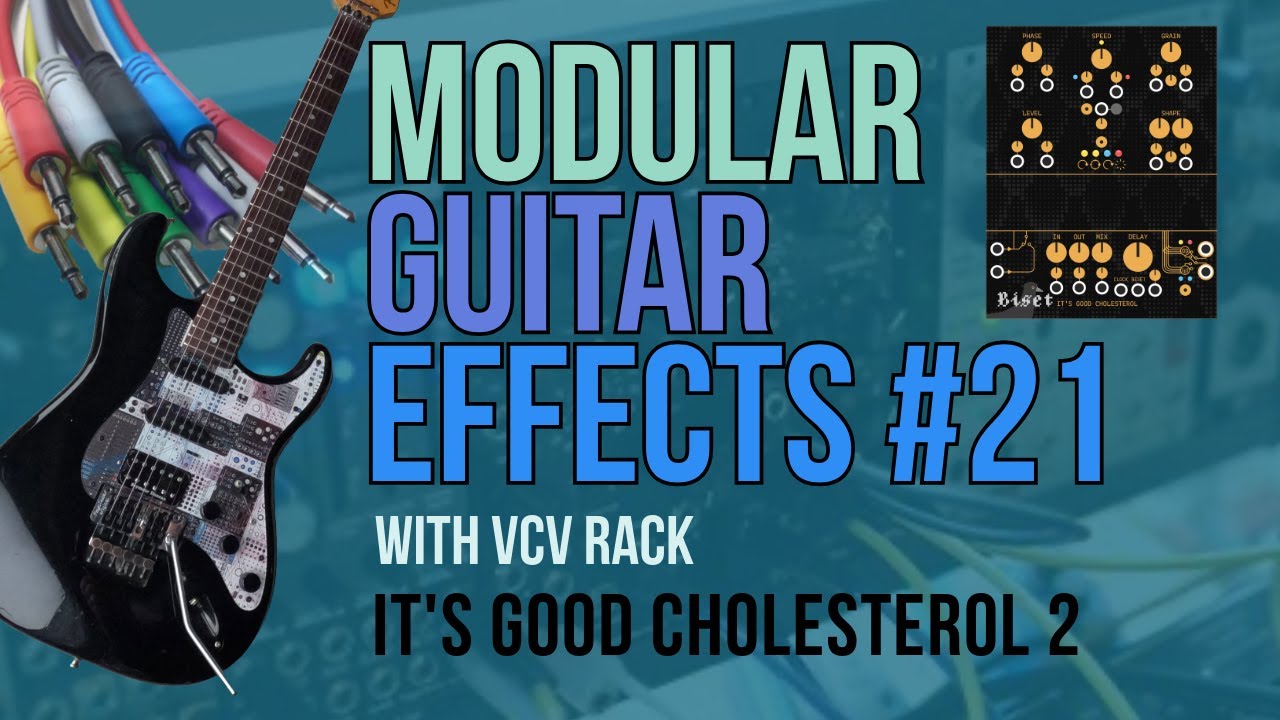
Here’s a ridiculous ambient patch with granular guitar and a kind of spectral drone using eight instances of Uzu, a spectral phaser plugin running in Host-FX. I’m using polyphonic modulation which is then split out to each plugin, with a single LFO that’s copied onto multiple channels going in and out of phase (an idea nicked from the MakeNoise MultiMod). This is the only thing I’ve made that managed to glitch the M4 Mac, so I recorded a few bits to audio and spun them back in with Sickoplayer.
Grainer is a great new granular module if you haven’t tried it yet! It goes up to 256 grains, so it makes really thick textures and the freeze works like a looper.
