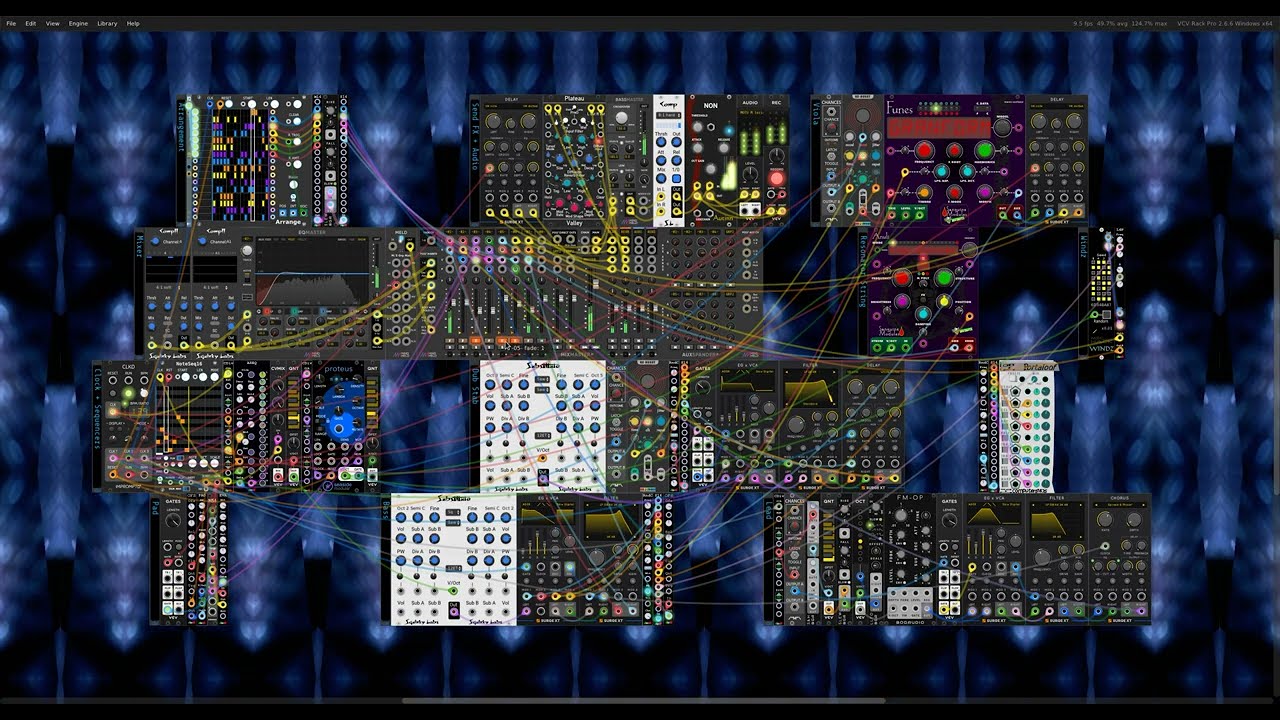
A Matter of Time — LIVE 03
Generative ambient drone meditation designed for long-term auditory enjoyment, covering a range of moods, including tension and release. A fair amount of non-repetitive modulation to add variation. Automated as well as performed periods.
This patch is evolving slowly but steadily, and with an occasional surprise. Bring some time to listen, sit back and relax. Meditate, decelerate and equilibrate. It’s a matter of time  after all :-).
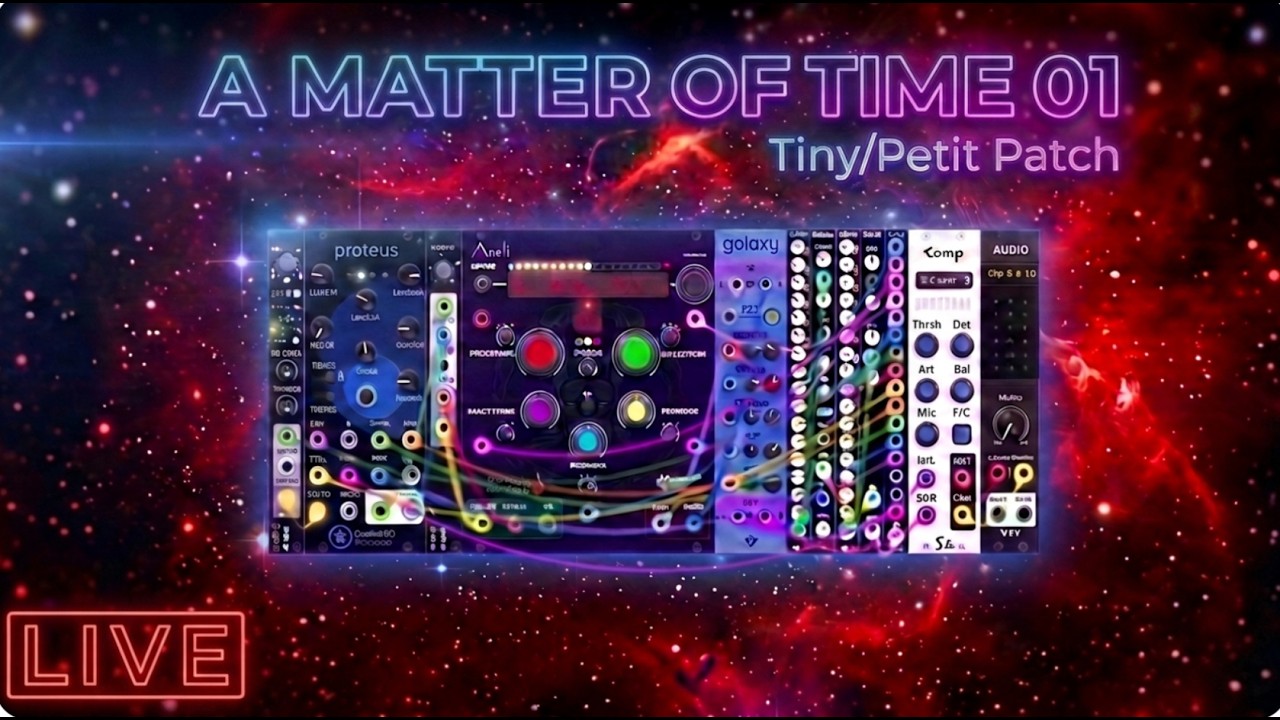
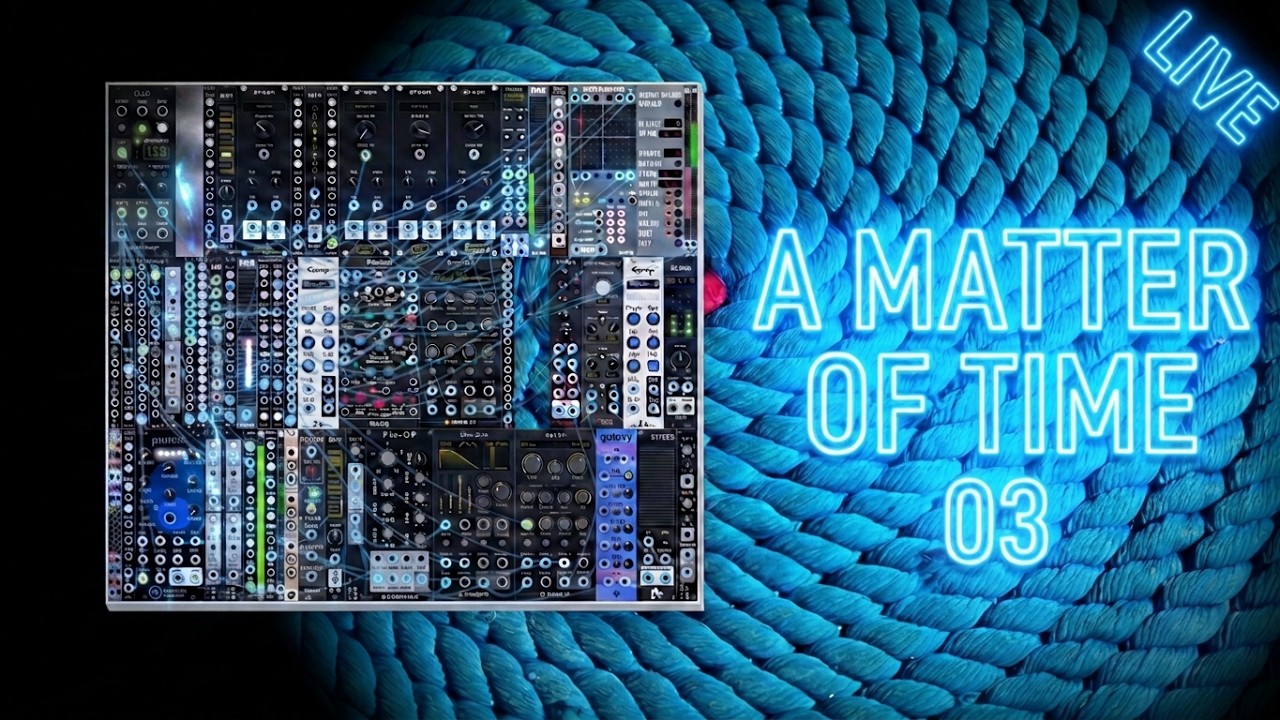
Four Draen (Forsitane Modulare) modules, each with different engines chosen. The Draen 2 engine and octave settings are selected randomly by CV. Draen 3 delivers percussive noises that are enhanced by a modulated delay FX module (Runner by Madzine). The pitch of Draen 4 is also chosen randomly. Overall scale is A minor.
The four Draen oscillators are then cross-faded in Vector Mixer (NYSTHI), which is controlled by two chaotic LFOs (X and Y), but can also be operated manually when respective connections in Null Cable (Venom) are disabled, indicated by red buttons. In that case, Vector Mixer’s red orb can be moved by mouse as part of a performance.
The speed of the X/Y LFOs is continuously varied between slow and fast, so sometimes the red orb hovers in one position for some time, then moves to a different location rather quickly.
The ‘eno’ engine of Draen 4 actually walks through Brian Eno’s ‘Music for Airports’ note rows, just in case something sounds familiar to you :-).
Nimbus (Surge XT) for shimmer, with its Mix and Position parameters being randomly CV-controlled. Various parameters of Plateau (Valley) reverb are also CV-modulated.
In addition, there is a melodic lead voice, intermittently faded in and out of the mix. It consists of FM-OP (Bogaudio) driven by Proteus (Seaside Modular). Pattern length (selection of 2, 4, 8, or 16 steps) is randomly chosen, and mutation and note density are also periodically randomized.
Thank you to everyone who joined the live stream!
The background image “Coil Rope” in this video was used under Attribution-Share Alike 3.0 CC BY-SA 3.0. Created by Nevit Dilmen: Datei:Coiled rope 03235.jpg – Wikipedia
 I had a quick try and couldn’t get anything I particularly liked with it, but the pad VCOs are awesome. It’s a really deep collection, I should probably try a few more of the modules because I’ve only used a few of them, and there are loads. It’s always a balance between loading up the trusty favourites you already know how to use and actually making some music, or spending time figuring out new stuff and experimenting in new directions.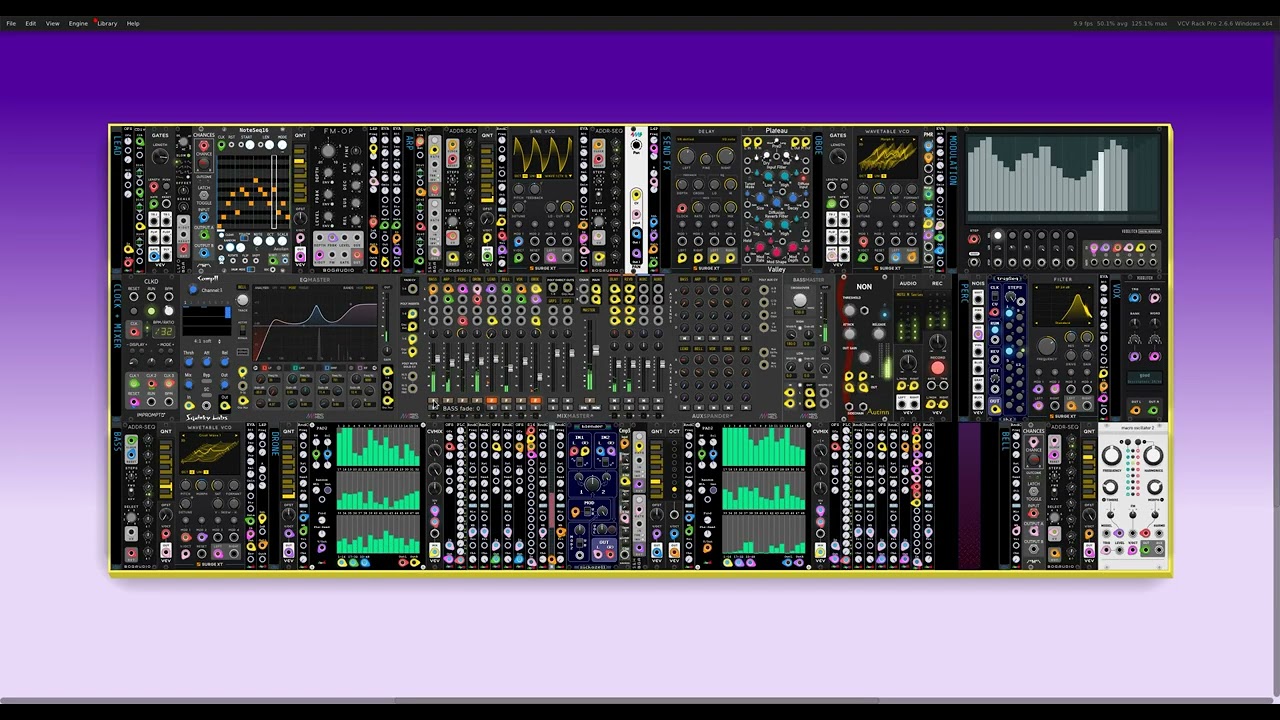
 .
.
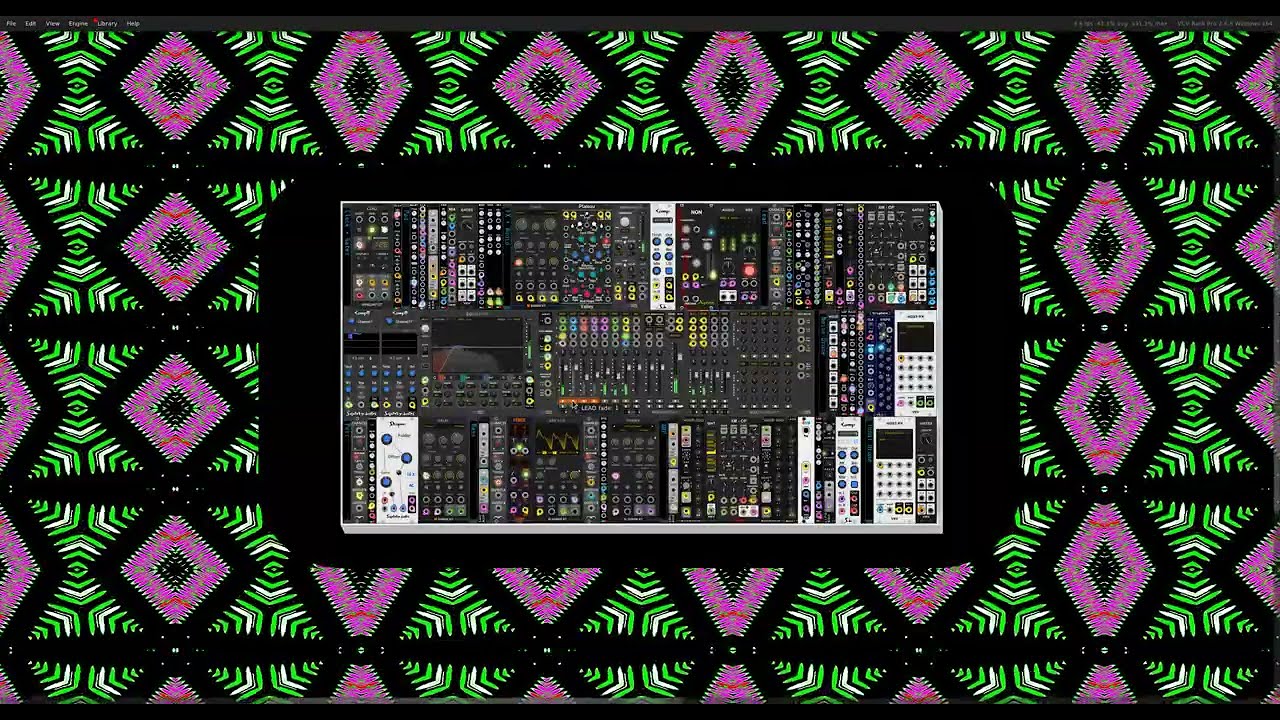
 . Glad you like the patch!