Techno live performance with VCV Rack (1h recording)

Last Saturday me and some friends organized a small live music event in a public park where they DJed (mostly dub techno) and I performed with VCV Rack for 1h and recorded the audio of it.

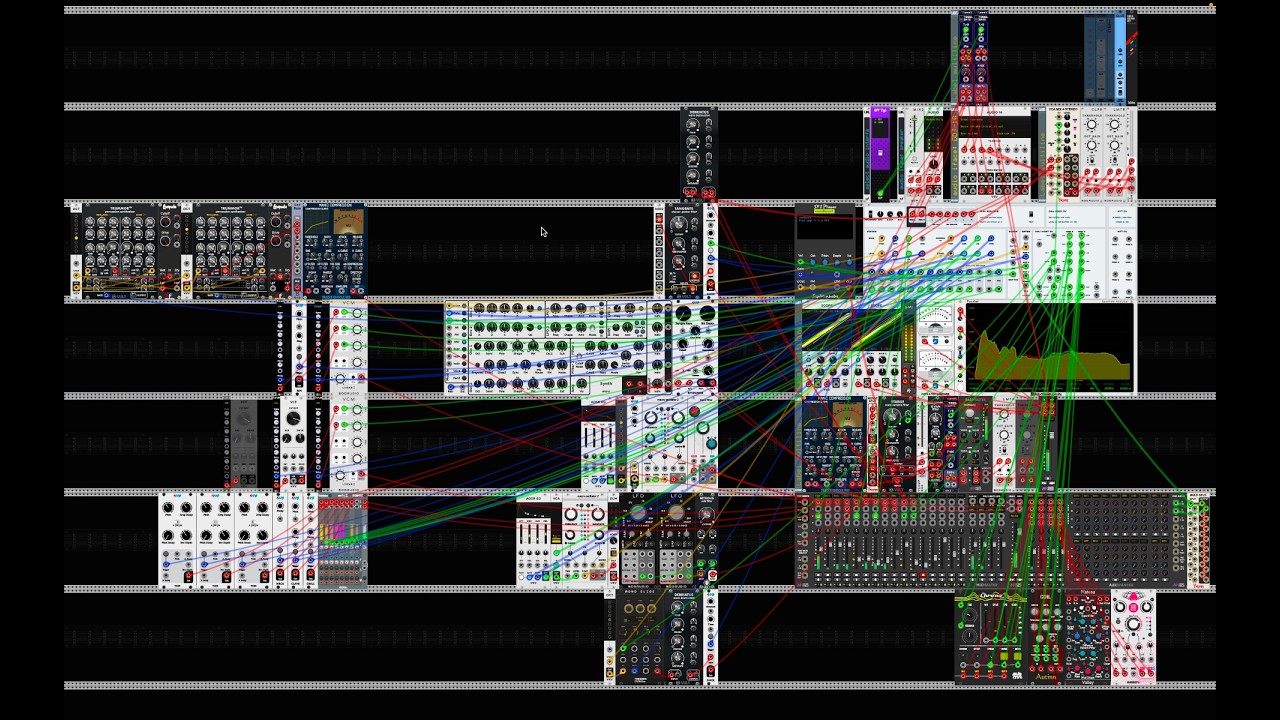
I had written a custom module for VCV Rack which acts as the “brain” of the live performance and as the interface with the performer etc.

It ended up being a bit experimental, this is my favorite part of the recording :slight_smile:

5 Likes

That is great to perform a VCV Rack patch in public. I’ve been thinking about that as one of my long-term goals. Do you have any advice from what you have learned by doing this?

1 Like

Advice? Hm, I mostly learned a lot that I can apply myself going forward. Too many things to list here. Not sure which of that is applicable to others.

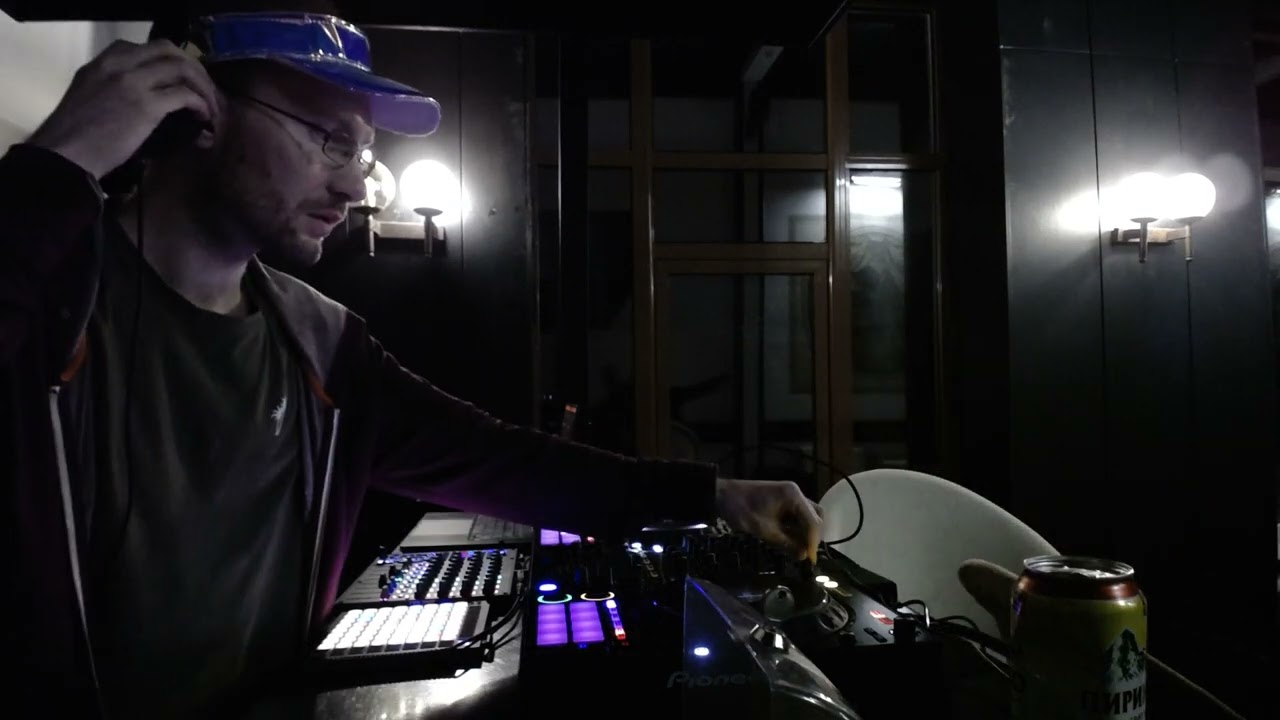
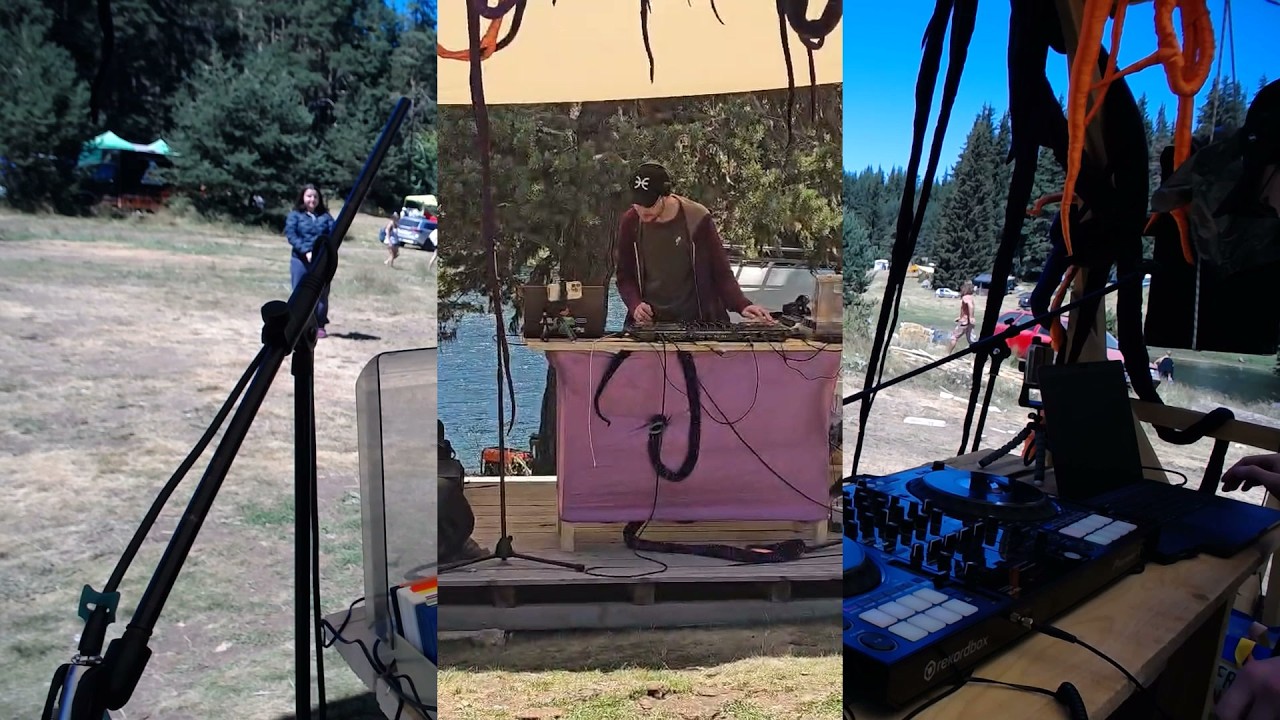
But yeah it was a great learning experience in so many ways. E.g. realizing how different and unpredictable the environment can be in a live setting. We didn’t even have a proper table, had to improvise. The surface wasn’t very large/even/stable so I couldn’t use most of my MIDI controllers and had to everything on the DDJ-1000. Luckily it didn’t rain, but the sunlight was so bright that I couldn’t see whether the pad LEDs were ON or OFF most of the time, which is why I had accidentally muted certain parts during this performance (because I use the pads as semantic toggles for different things). Also learned a lot about how to perform better by doing it and reflecting on it. Also realized I had to fix my sound balance, my bass was way too loud so it was clipping in the speakers :sweat_smile:

So yeah, a lot of learnings for myself, but not necessarily applicable to others, depends on your situation. It’s always difficult giving advice to others without knowing what they already know or what their their situation is.

Based on what you wrote:

That is great to perform a VCV Rack patch in public. I’ve been thinking about that as one of my long-term goals.

I’d say, don’t put it as a “long-term goal” to do “one day”: make it already your short-term goal :slight_smile:

Make a plan today, how/where you’re gonna perform (in the near future), with all the details (e.g. prerequisites, what you need in your VCV patch, which MIDI controllers, which musical ideas you want to show to the world / how you want to express/perform them → how the controller mappings have to look like, etc.), and then make some non-zero amount of progress executing that plan every day.

Like you see in the above photo, this wasn’t some big official event, just some friends getting together at a public park (unregistered event), someone brought a huge battery, someone brought speakers, and I brought the DJ controller, and then throughout the evening some guys DJed and I performed with VCV Rack.

This was my 2nd ever public live performance (first was on May 16, I rewrote my whole engine since then and didn’t have enough time to practice performing with it for this event). I was definitely under-prepared, but still did it, I didn’t even sleep the night before (and barely during the whole week), I was working on my own VCV Rack module that contains all the business logic of my live performance system/vision. The execution was severely lacking compared to my vision/expectations but it’s ok, I’ll practice more and get better :slight_smile:

Every day taking steps to get closer to my vision.

E.g. yesterday I had a remote session with a mixing engineer to fix my audio balance in VCV Rack (so the learnings from the event already had an immediate effect resulting in me taking different actions than I would have otherwise. If I hadn’t performed live, I wouldn’t have realized how badly the sound I had translates to big speakers. And by performing live in front of people I realized what I should prioritize next, instead of just being in my own bubble and having too many ideas about what I could do next).

And today I’m working on improving the sound design & performance workflow with my holistic controller setup (although I’m replacing the Intech Grid controllers with a Neuzeit Drop controller).

There’s something to do every day.

The long-term goals only happen when you pull them closer towards the present, otherwise they “stay in the future”.

I don’t know if it sounds like good advice to you (maybe you’re already actively taking steps towards that long-term goal of yours), so this is mostly advice I would give to myself in the past :sweat_smile:

So, my “general advice” would be: Work towards your (musical) goals a bit every day and involve other people in your musical feedback loop, ideally “end-to-end testing” by actually performing live :slight_smile:
5 Likes

Thank you for taking the time to write up your experience!

1 Like

This is great advice, and it points out where I’m hesitating due to fear, not for any good reason. They say, “your dreams are on the other side of your fear.”

I do believe in just doing things, making it messy, and learning as you go. Thanks for the encouragement!

2 Likes

I think if you get out and perform, just a few times (don’t let your experience hinge on a one and done experience) you will find a community of like-minded interested parties. Guaranteed.

2 Likes

the hardest part is to start. after the first one, you may likely find yourself a bit surprised at how the big, scary stuff is quickly cut down to size (the devil being always, as they say, in the details).

one suggestion i can throw into the hopper fwiw :smiley: tho it goes in great part contrary to your path of “making things messy:”
once you feel like you’re getting close to having the elements you want to work with in place, spend a bit of time with the physical setup.

it’s easy to go deep into the patching process (and sometimes all too easy to just let things stay on that ride… )

but once you take that show out to the world you will have to set it up there, and that process can’t be allowed to flummox the true task at hand.

practice setting up and breaking down a few times. as a dear friend once said of me, “you do that like a union guy.” for me, it serves the performance better to keep the rote stuff way under control.

i suppose all this might seem kinda dopey. but my performances are always improvised, and i’ve found that removing anything that could divert focus away from the full and fabulous functioning of the very sensitive inner-antennae that guide my flight places the magic carpet closer to takeoff.

so, thanks to a repeated set of memorized motions, i can set up and break down my rig with relatively little effort. which helps me face that little “and now where has the audio output gone?” surprise that always needs ironing out once everything’s connected and switched on.

anyway, just something to consider. as i say, way more time and thought go into patch creation (or in my case, elements selection & the general mishandling of them) – but the mundane must have its day.

oh – it also helps to bear in mind that, like as not, it will be rather dark where you’re working, which contributes a further layer of distraction when it comes to dealing with tactile physical elements of the equation (on top of which, somebody often wants to be talking to you then as well). so it’s nice to develop “a feel for things.”

in a darkened space the ante goes up when it’s time to break down: i’m usually a trifle zonked after a few hours of deep-focus-zoo-keeper’ing-the-sounds. so the chances of not going home with something i arrived with increase significantly and we do not like this to happen. me, i use a head-mounted flashlight muted with an orange lighting gel so as to keep both hands free and not to unduly harsh the room vibe.

2 Likes

Yeah, also very good points, and resonates with what I learned from this experience, e.g. the audio was not working at first (nothing came out), it took a while to get it working.

There are so many things that can be different or unexpected in different live situations so it’s about going through the reps so that you’re encountered every thing that can go wrong and it won’t throw you off because you know how to handle it.

Another realization I forgot to mention above: Just by being more experimental with my performance (partially because of sleep deprivation, partially because of being nervous and other factors), even though the timing was often off etc., there were also some unforeseen good things I did intuitively, which I later reflected on, to make a mental note of those and integrate them into my conscious performance actions. E.g. my favorite part of the recording happened without me thinking much about it, more like by me just doing things based on how I was feeling in that moment. So that’s also a learning, that certain things (like preferences for doing things a certain way) reveal themselves more by doing something and being present in the moment, than trying to think in advance through every possible scenario.

all so, so true. to focus upon a point:

the idea i wanted to share – i regret, by dint of woeful belaboring – was that taming the repeatables hopefully allows those elements that want to run wild (and should) as well as them what just always intrude even tho one might wish otherwise – to do so when the moment calls.

both can benefit from any headspace that wasn’t gulped up simply by contending with the mundane.

now, i hasten to add that i myself am not good at this, but… i try.

i just always look ahead at what i can make easier for myself, so that what i can’t – and often, it’s lots – gets the full 67% of my attention.

3 Likes

This resonates with me in a completely different area of my life. For nearly 10 years I have been teaching yoga classes on a weekly basis. When I first began, I could not afford to “wing it” because the result would have been a train wreck for my students to experience. I had to have a fixed sequence planned for the whole 75-minute class, and try to end it approximately on time. I practiced, practiced, practiced dozens of times before my very first class in 2016.

With enough weekly iteration, over a span of 4 or 5 months, I gradually got more comfortable shifting from a fixed sequence to a 9-step “template” where I could slot things in or out. Step 6, for example, was “do some kind of back-bend”. And I already knew how to teach 3 different back-bend poses. Picking which one I would lead became my first little taste of improvisation.

After 10 years of doing this every week, I can improvise pretty much the whole class, including mutations to my template, while managing time. It even feels easy, but it would have been impossible when I first started.

Circling back to “making it messy”, I wasn’t very clear expressing myself. The most important part is allowing myself to make mistakes without losing heart. As a yoga teacher, I was inspired by something in the Four Agreements: all I have to do each day is show up and do my best (and your best changes from day to day).

I guess the balance is to practice enough to feel like what I’m doing is my (current) best work, while not getting neurotic/perfectionistic in the performance itself. I know how to do this psychological thing leading a yoga class. Hopefully some of that mindset transfers to performing music in front of others. I think the difference is I don’t know if music audiences are as kind and forgiving as yoga students!

2 Likes

indeed! personally, i manage this by living according to an admittedly glib axiom: referring to mistakes as ”happy accidents.”

i think that, in a way, most things – or at least, more than it would seem – are made of everything. once the effort of opening connecting pathways is past (and it passes quickly) it’s kind of amazing how much… oh, i don’t know – let’s say canoeing, maybe – informs performances.

i believe that on some level, essentially people want to like performers. it may go some distance in showing the world how smart they were in their aesthetic choices the moment they feel gratified by making one.

that said of course, there are always sticklers out there… but i’d be willing to bet that the most critical audience is….us!

3 Likes

Thanks for mentioning the book The Four Agreements, I hadn’t heard of it before but it seems very interesting and I just bought it on audible :slight_smile:

And yeah, you can apply the same process of those yoga classes to music live performance, and it would not even require a live audience to practice at first: you can record stuff in the comfort of your own home where there are less unpredictable things in the environment, and then upload those performances, and see how people respond online. “There’s an audience for every niche.”

I think the difference is I don’t know if music audiences are as kind and forgiving as yoga students!

I think it really depends on the expectations audience. There are some spaces/events where experimental stuff is more appreciated.

E.g. with online content everyone who doesn’t like it can easily divert their attention to something else by clicking away, so it’s an easy testing ground, and the people who like it will stay listening.

And then you could see based on the online feedback when you think it’s ready to take your performance concept into the real world.

that said of course, there are always sticklers out there… but i’d be willing to bet that the most critical audience is….us!

E.g. I got 3 positive comments on that YT video, which I didn’t expect because the performance was way below my own expectations (I guess we are our own worst critic), but you never know in advance who might like it. I also like some very experimental/non-mainstream stuff.

You could even practice the same performance so often that you can do it in your sleep, like the same sequence of doing things, until you nailed it regarding muscle memory and “get bored of doing it the same way”, and then you open it up to more improvisation / switching things up, similar with how you practiced the same sequence of doing the yoga class at first.

E.g. if you practice one performance until you can do it very well, then record a video of it, put it online, then you can send it to someone who organizes events near you, and maybe you get a chance to perform at their next event, and then you could even perform the same performance sequence there. The people at that event probably haven’t heard your online recording yet, so it’ll be new material for them :slight_smile: And then you practice another sequence or add improvisational elements to your existing one. I think it helps to have structure like that initially, rather than trying to improvise too much from the beginning.

i believe that on some level, essentially people want to like performers. it may go some distance in showing the world how smart they were in their aesthetic choices the moment they feel gratified by making one.

Yeah, usually people who are open to new music and go to experimental music events are open-minded and even if they don’t like something they’re still polite and they’ll still want that artist to be themselves and express their artistic vision rather than trying to cater to some imagined version of what others may like. Some people appreciate smart aesthetic choices and some people appreciate more if someone is just trying to authentically express themselves / their taste without thinking too much about how it’s being perceived, it really depends on the audience, but if you put stuff online, over time you find the audience that likes what you do :slight_smile:

But of course there’s also a lot of value in being part of a local scene and regular meetups/events etc.

1 Like

Oh yeah this is 100% transferable. I grew up with musicians and have played shows since I was little, so that part of life for me is the one where I have enough practice under my belt to “afford” being more spontaneous. Or rather, I know pretty well by now which things will survive the spontaneity and which ones require some forethought. Other situations in life where I don’t, of course, and those insecurities you describe resonate a lot. There’s a ton of stuff that it seems “everyone else my age” have figured out that I’m still struggling with.

But yeah, your Yoga teaching experience here matches what happened for me pretty much 1:1. At first you’ll be spending tones of time on prep and practice, then as you do it more the need for that will lessen, freeing up energy for other focus points. The messiness/improvisation/unplanned stuff becomes (in general) more purposeful as well the more you know what you’re doing. Eventually that insecurity about mistakes largely goes away too. Mostly… we all have bad periods. But it does get better if you don’t let’em stop you. At least IME.

2 Likes

Btw, I recorded another live performance with VCV Rack, that I did at a coliving space last Saturday:

This one was more of a “background music” / chill vibe, because people were sitting and talking, so I was playing at a quieter volume and reduced energy, it wasn’t a dance party, just a chill evening at a coliving space, that’s why the energy curve is kind of flat over the whole duration.

But yeah, this is still far behind my artistic vision, it gets boring over the whole 3h duration, there isn’t enough variety in sounds, not much modulations/expressivity etc.

1 Like