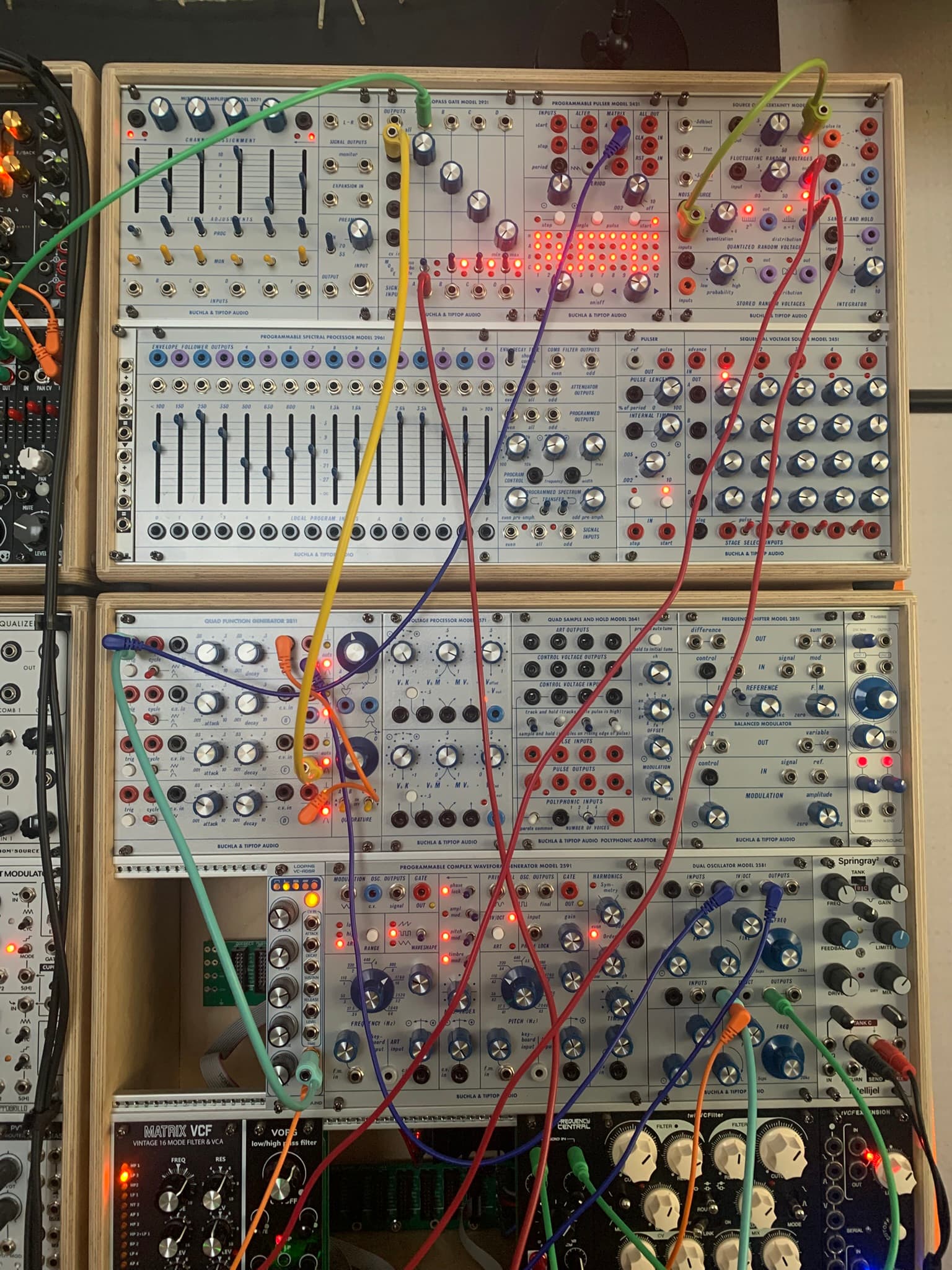
(and yes, that is the new AJH Oberheim - my first module of his - it’s a fantastic filter!)
@karlderletzte - It’s coming in the next pair (I think it’s a safe bet that the 230t will come first). They’ve listed it to get the buzz going before Superbooth next week, but as the 4U reissue has been done, I’m confident that we’ll see it this year.
waw wonderful system!
I’ll have a look tomorrow at superbooth but I’m super excited about this! … just very much afraid for the pricetag! … maybe I’ll manage to do get help from Tiptop to make an eurorack version of the videos who knows!
Thanks Nik! the development of this stereo vco was a lot of fun, and I still enjoy the geekiness of making the user manual
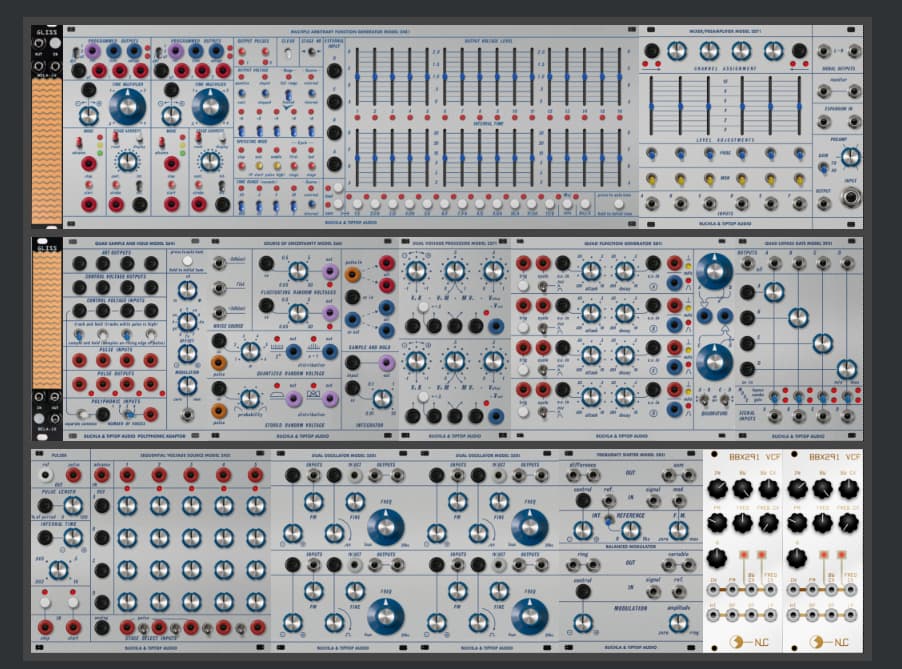
For a ciani cookbook in eurorack, I think this system should do it… we miss a matrix mixer which is not an essential element of the patch, and a multiband filter but the 296 seems an overkill… hopefully Tiptop will do the bandpass filter at some point, meanwhile the NLC is teh only option I believe. … also need a 4x16 steps sequencer just to have the 4 sequences … maybe a keystep
Man, the MARF is such a beast, this will be an awesome module. I also got it now where Emilé got the idea of Stages from. I like how Gur spoke of ART, and it being fully open spec. with no licensing needed. I keep seing people in Eurorack forums saying “proprietary” and I don’t know where it’s coming from.
The spec is sort of open in that you need to email them (I have just now). My limited understanding is that was a slightly missed opportunity to reach out to other manufacturers / users, and reach some consensus. Instead it was just put out there, and (maybe?) not open from the start (not sure on that point).
I think Gur may have gone about this in a odd way as @hemmer says but I wonder if it is because if he’d called out to other makers to agree a standard for Euro polyphony then it would turn into a Midi like saga and would never happen, whereas he seems driven to realise what he sees as Don’s vision, and that requires putting the controversial ART jacks on the panels now, not down the line.
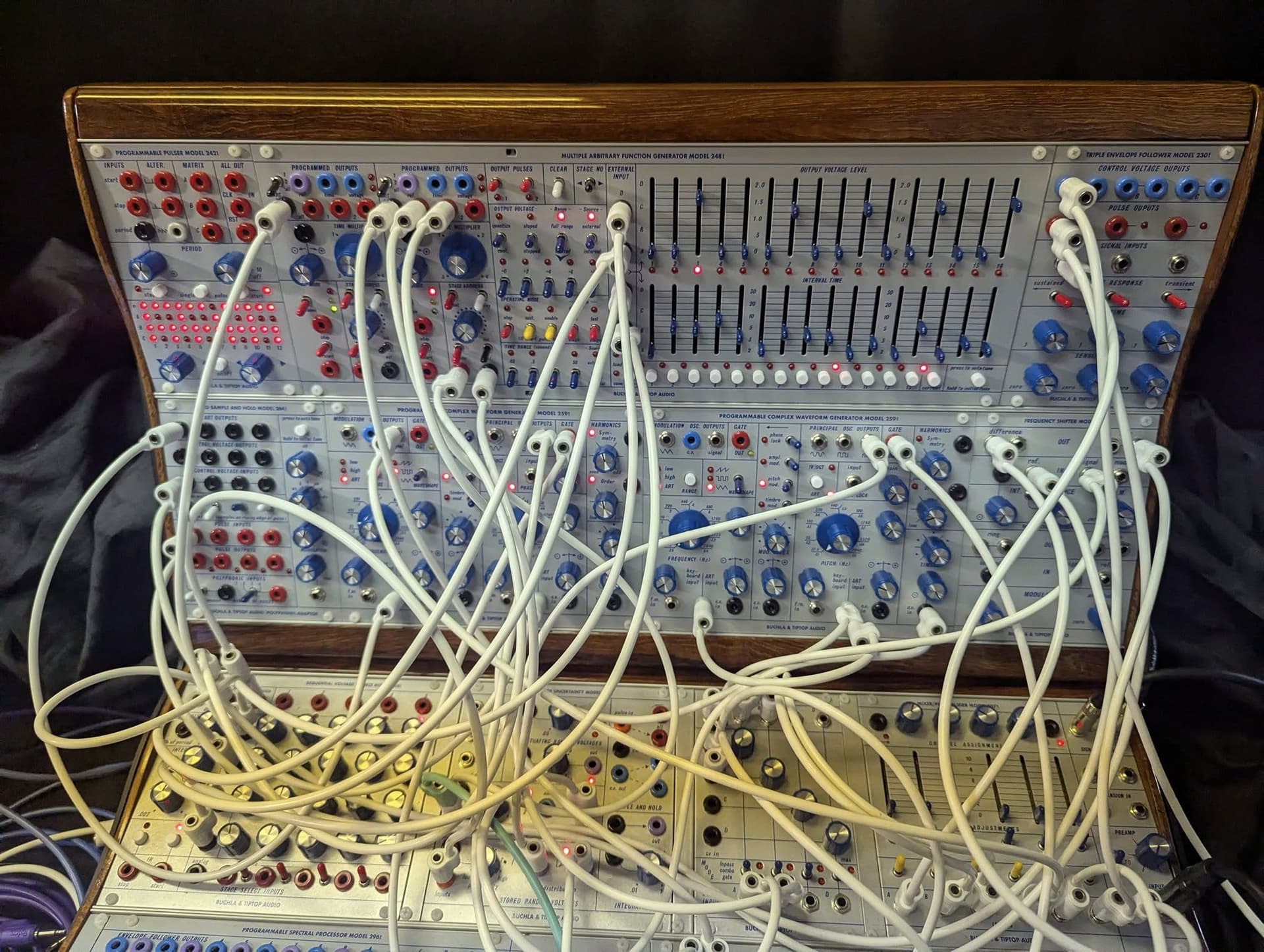
Ok so I’ve been there to say hi, they let me patch a proto-Ciani 4 sequences patch based on their 5-step seq instead 16 and it worked just like she said! … and we are talking about potential next steps we’ll see where it leads!
What I really like is that the added quantizer works for both wierd ART thing and normal v/oct out!
So as you can see (lol) , the 4 sequences of the 5-step seq are sent in the 4 ABCD inputs of the marf.(the added quantizer process external outs so it works great for Ciani style sequences)
I only used playhead 2 to control the ART in of a pre-patched complex vco, but the other playhead should be patched as well for full effect. pulse out triggers an LPG
The 5-step seq clock is running the source of uncertainty and strobing the marf’s playhead, which is addressed externally by a random signal from the same S.O.U. This is how to select random steps of the marf on a tempo.
Now all steps of the marf need to be set in external mode with the switches (click click click click click!) so it listen the 4 extrenal 5-step sequences. with all 16 faders down (position A), we hear only the first 5 step sequence. by moving some faders, when teh playhead hits them randomly, the current step will be replaced by one of the other 3 sequences (defined by the position of the fader B, C, D)
An extra layer of fun ca be added because each step of the marf can have an octave ofset progrrammed, and added to the external input. you can set a few steps to +1, +2, +3 oct and when randomly hitting this steps, teh sequnce will have notes popping up from time to time
This is extraordinarily cool!!! For so long I’ve had both feet firmly planted in the “east coast” subtractive world since I generally adore the Moog and ARP sounds. But lately I’ve been feeling just a bit more adventurous after watching the Sisters with Transistors documentary and digging into some of the featured composers’ methods. Now that I feel I understand the “low-pass gate” and “function generator” ideas, I’m a bit more prepared to take in more of this world. I look forward to perusing the many resources you’ve shared, and exploring some of the patches too. I’m thrilled that you’ve found and shared the Buchla Cookbook and that you received such a kind reply about re-creating more of it!
I was so inspired that I have gone and explored how to translate your VCV Rack Cook Book patches into Bitwig’s Grid. I won’t belabour that here, but the results so far are very promising and offer some unusual options that are remarkably musical and pleasant to perform.
hello, I am curious if you could recreate the patches in grid. Because I was thinking about buying the grid, I ask onto Cohen about comparison of vcvrack and the grid. he answered that it would be possible, but because there are only more basic elements you have to patch a lot in the grid to recreate from vcvrack. please tell your results.
thanks
Karl
PS: a year ago, I patched the different cookbook patches in vcvrack more or less together for jamming. it is a very good playground for learning. pyer made a lot of fantastic work.
I made an interpretation of the more musical functionality that I liked from the VCV Rack Patch. I can’t get my steps to slew nicely, so this is more of a performative sequencer than a super-complex envelope generator. If you are curious you can check out my website where I have shared a copy of my preset and have written up my notes.
Hey! it works great! you really got the “prism melodies” feel with random accents, it might be my fav thing in the cookbook: pick random notes to accent on a repetitive sequence makes it really like someone is jamming over the thing

 who knows!



 Hope we can hear your recording of the TipTop Ciani patches, that’d be cool!