I didn’t get too deep into this web page scale tool, but I did see that it allows selecting scale notes from the musical treble clef staves and the app will name the scale. This is similar to my posts here yesterday regarding a VCV Rack module that would allow chord notes to be selected in a similar manner. Or, a text list of notes can be entered and the app will name the scale, I think. I need to play with this a bit more. This site has very rigid copyright claims that prevents even a screen capture from being posted here.
I kludged together a patch using existing modules that allow up to 6 note chords to be built by clicking on notes on the piano keyboard module rather than selecting from notes on musical staves. The way I did it required 6 keyboard modules with the 6 combined via Merge. I then displayed the chord with Squinktronix Visualizer which puts the notes on the treble or bass clef staves and with scale and root selected, the chord is properly visualized. I used Squinktronix Harmony and Harmony II to play the chords, with limitations. I then used Squinktronix Arpeggiator to “arp” the chord. I may post images or a patch here if there is interest.
I used “unless pianoid” and “MSC HACK Triad 2 Sequencer” modules for my kludged patch. Does anyone know of any other piano keyboard modules in the VCV Library?
This kludge was just a feasibility test for creating a chord editor.
2 Likes
A quick search of the library for “keyboard” showed several piano keyboard oriented modules that I had forgotten, such as the Impromptu modules.
1 Like
Very cool watch!
A dynamic quantizer that follows the low points of a curve?
I would think that could make new scales/chords with an interesting method.
But the curves apply to sines, what happens past that? He mentions timbre and tuning intertwine. So as you get complex sounds, curve may be pretty exotic.
For myself, the endless listing of different scales is difficult to justify for me. I used to think finding every permutation of N notes in one octave was key to secret knowledge. I mean Coltrane studied the Slonimsky book of scales, so it must be good to know thousands of scales and arps. But yeah, it has limits.
Oh, that site is over the top
Your post has given me the idea to give my patching some guitaristic chords and some harmonic movement more aligned with jazz or classical. Xmop has been good for a nice poly fm synth I can gently brighten and add fx to for a voice that sits somewhere in the guitar range. I hope to share some patching, but it’s exploratory at the moment .
It’s not just sines, anything with a harmonic timbre behaves more or less strongly as described in that graph. Harmonic timbre meaning the tuning of the overtones follow the harmonic series i.e. whole number ratios 1:2:3:4:5:etc.
Or in fewer numbers: It “works” (= “somewhat accurately predicts perception”) for guitar strings, the human voice, violin, a sawtooth wave, etc etc. It does not “work” for church bells, weird exponential FM sounds etc etc.
Now, I haven’t watched that whole video yet, but the basic issue the person describes is one I agree with.
Basically the problem domain is this, the author Sethares (and many many others) have noted that that major chords sound less subjectively “in tune” in the standard 12tet than they do in Just Intonation. But one of the reasons for this is that the 400 cent interval itself is not present in the harmonic series. If you use timbres where the overtones are re-tuned to their nearest 12-tet frequency, then the 12-tet major chord sounds “still” in the same way that the Just Intonation major chord did before.
That’s only really relevant if you wanna make all your music with synthetic sounds (how else are you gonna re-tune all the individual overtones?). But for what it’s worth, it is a really solid observation. If your goal was: “I want to make electronic music in 12-tet, or some other non-just tuning, but I want my chords to have that beat-less quality like Just Intonation chords do”, then Sethares presents you the answer. And I have heard some folks make really fascinating music that way.
There’s three elephants in that room that I personally can’t ignore though:
- I don’t wanna give up my acoustic instruments
- I don’t wanna give up saturation/distortion tools (which introduce integer harmonics that would muddle the effect)
- Like the person in that video points out: To get the effect, you often to retune partials enough to sound really weird on their own. Kind of a high price for beatless chords.
So my conclusion has been, I can enjoy that music when someone else makes it. For me, it’s better to either accept the beating of the chords in 12-tet (or whichever temperament) for what it is. And whenever I really want very in-tune fused-sounding chords, I’d rather just make music in Just Intonation.
I’ll be curious to see what conclusions the person in the video reaches.
2 Likes
Cheers, I look forward to hearing this. Anuli is a prime candidate here, it’s Rings but polyphonic so you can get that nice plucky Rings sound and do chords.
Although, any reason you don’t just play some actual guitar chords and record or sample it?
1 Like
lol, point well taken, a bit of guitar could be just fine, but I’m always visualizing a complete ensemble in VCV synths, im pretty well getting happy with some of these tones, will share some soon
I’m mostly tickled that talking about stuff has me patching something different! That’s gold for me .
1 Like
That video about the Sethares thing is uh… pretty good I think. I have my questions and concerns…Like, are we sure we even know what experience we even refer to when we say “dissonance”, or that it even is singular? I have never met anyone who makes music with just sine waves, and damn near 100% of all music I’ve heard uses harmonic timbres to some (usually large) extent, and given that, how much stock should a given person actually put in the way they perceive chords made with inharmonic timbres? Etc etc.
But the test they set up is at least a pretty solid way to explore your own perceptions. And I do like the fact that they acknowledge the variance in people’s experiences, rather than assuming there to be some universally human truth like other researchers have.
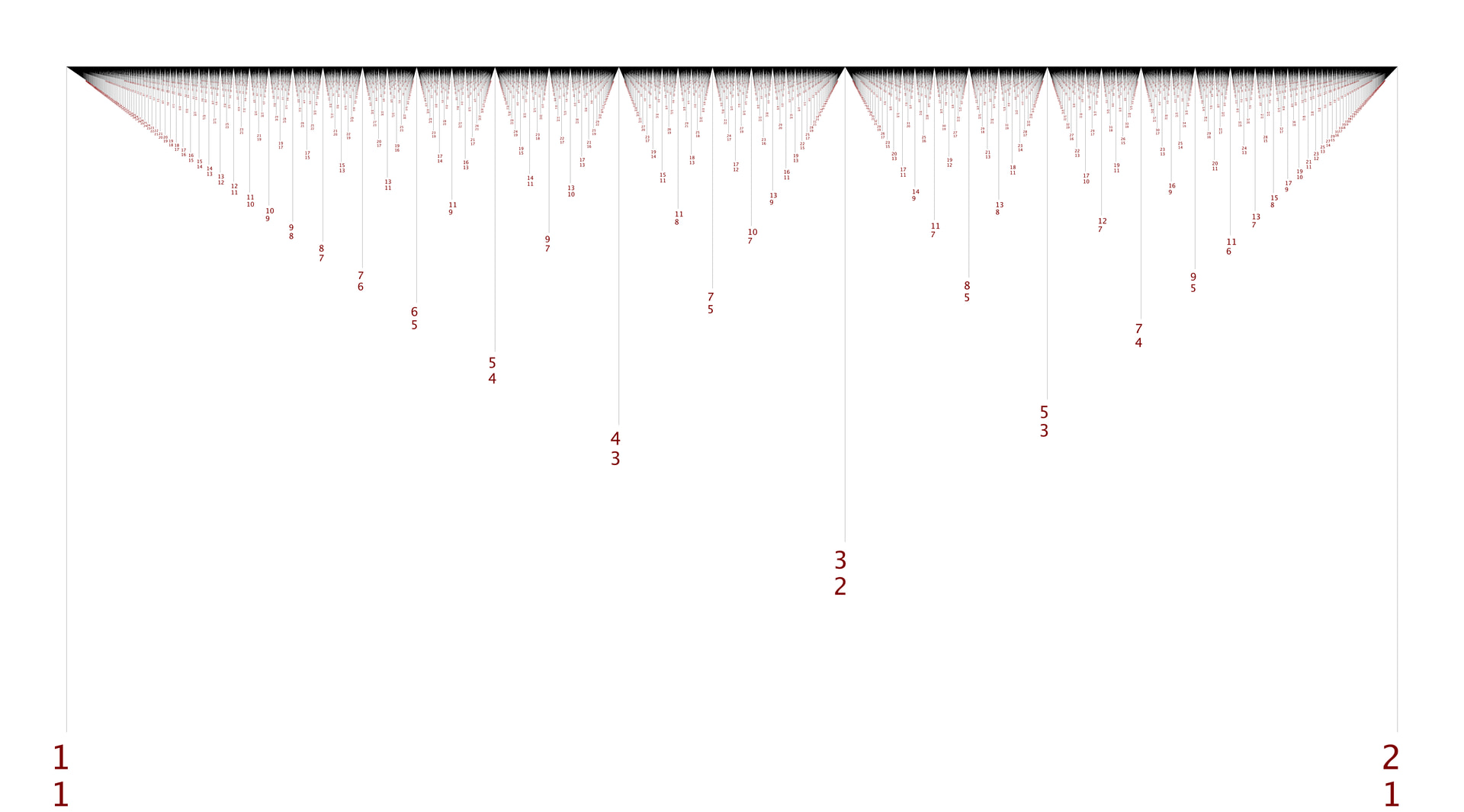
Anyway, here’s a pretty neat graphic over this stuff (assuming harmonic timbres):
2 Likes
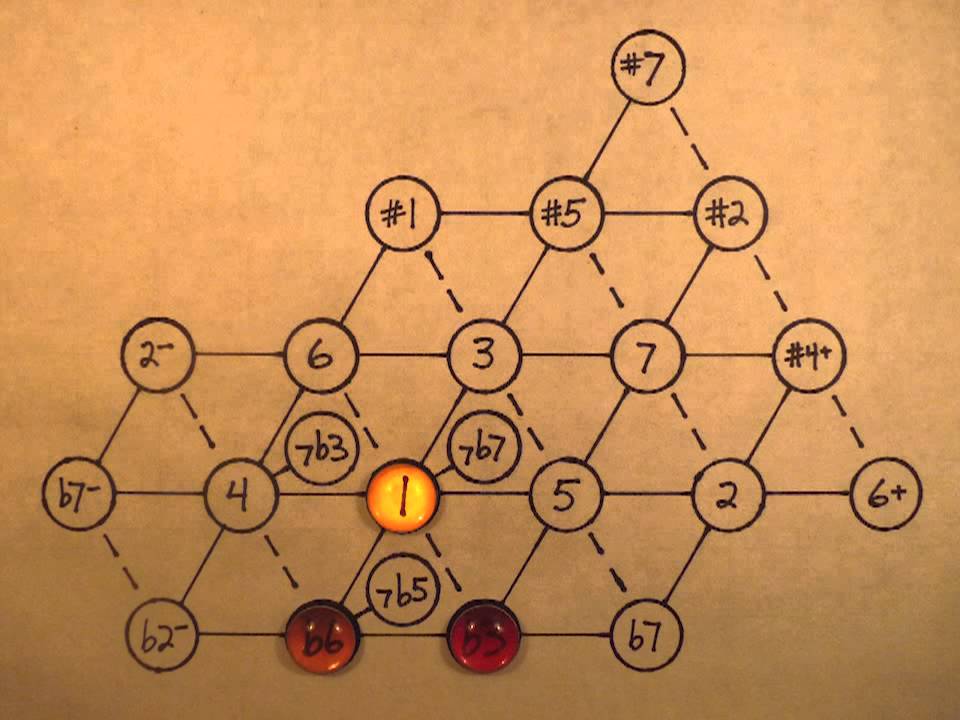
And if you want something equally nerdy but way more, say, down-to-earth, here’s one of my favorite music theory things in the world:
2 Likes