Thanks everyone. Appreciate those who are being helpful.
you can save a template patch for both the standalone and vst rack.
It would be nice if there was a macro knobs control built into vcv rack. like a user panel that can be shown or hidden and has 8 macro knobs and mayeb some other useful tools.
You mean this?
2 Likes
or this:
1 Like
or this:
I use Knobs a lot! I love the look and size of it too. Sometimes I wish for a “micro Knobs” which would have 3 or 4 smaller knobs in one module. Maybe it would look like Vult Fuser, but then with the functionality of Knobs. Having different sizes helps creating an effective controller area in the patch (like in patchmaster)
When I use it, I put a VCV CV mix connected to a cv input of Knobs, effectively creating this. With the dark panel of vcv, this looks already really nice!
@ osgbcn,
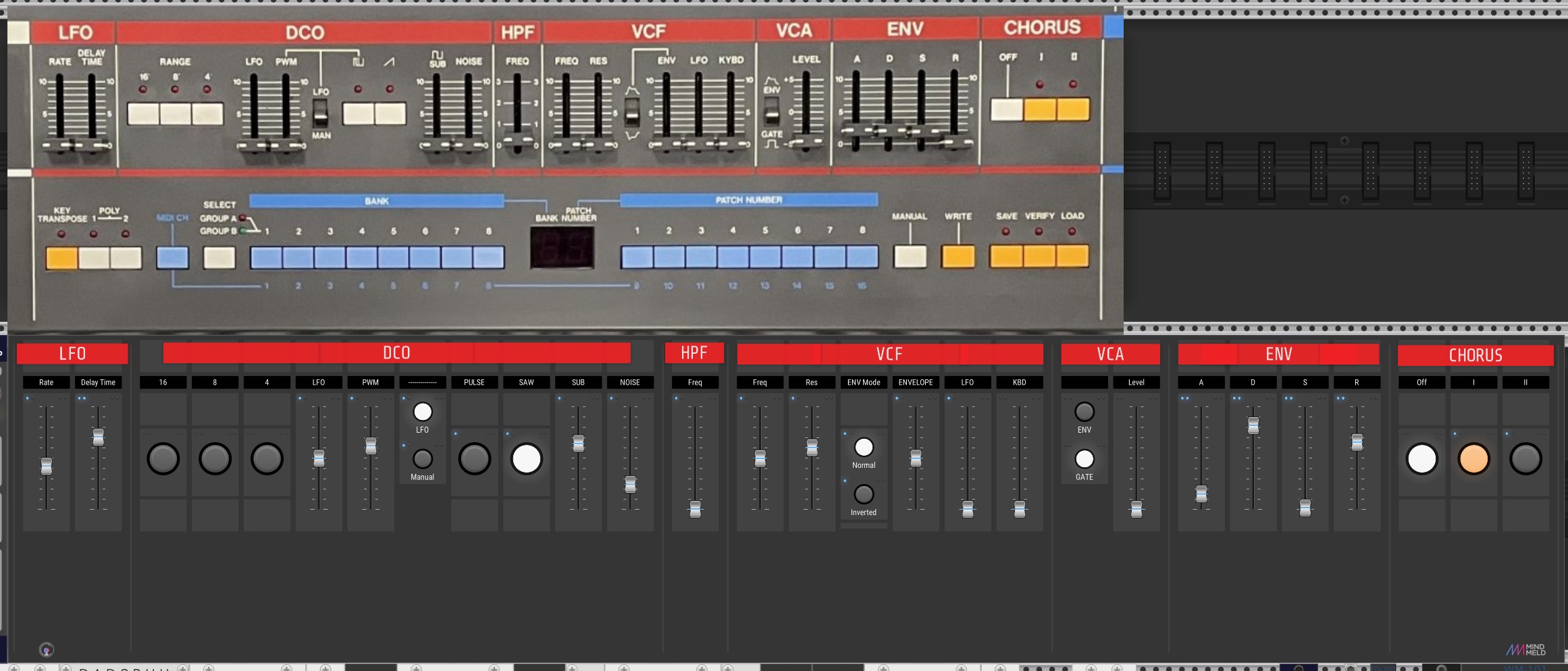
Or this setup to map and control 32 parameters using 3 modules.
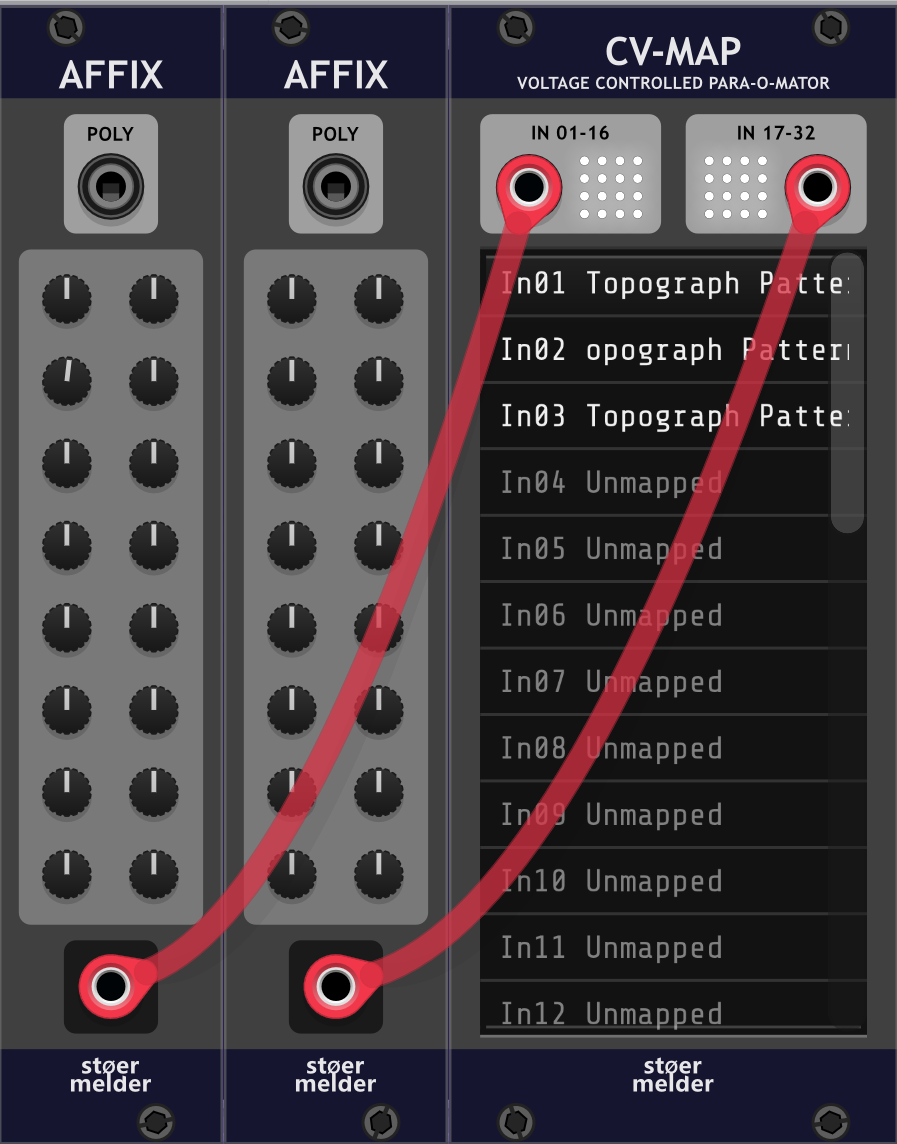
Right click each “Affix” and set to 16 channels (or it will be controlled by inputs)
Right click CV-Map and set Signal Input to (-5…5V)




Hello Koen and members,
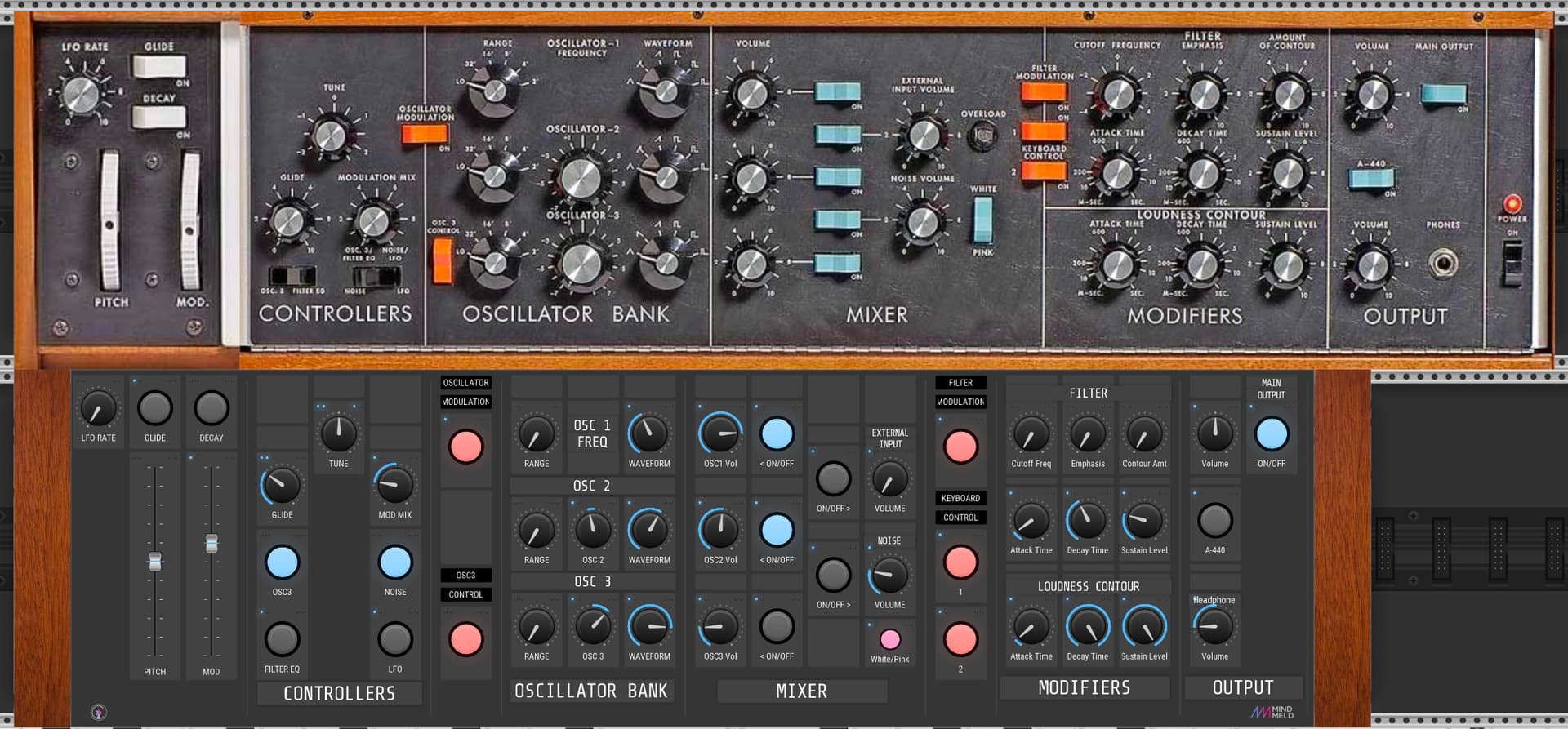
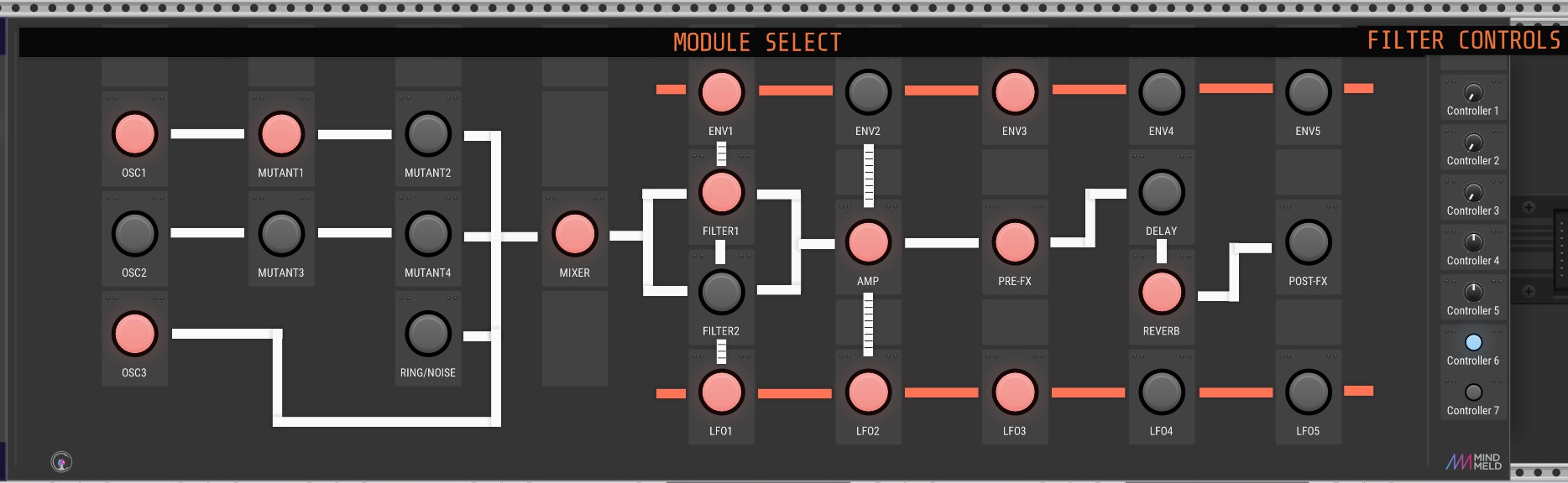
We talked about eurorack building blocks earlier and that journay has arrived to start here. The Mindmeld and stoermelder CV-MAP are they “eurorack-language”? That is to say they do they send out CV or are they strictly from the Software Realm? I am wondering why the pitch on Kickall is given in Hz and on the sequencer in Volt? It would be practical if they could be both in Volt?
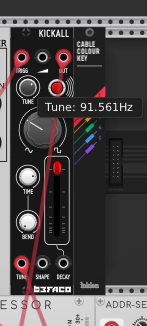
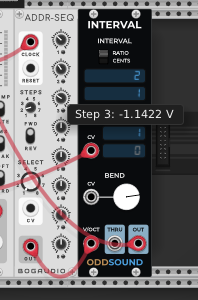
My first attempt to modulate in eurorack language would be, for every 16 pulse to make the pitch on kickal move to another pitch in 2 pulses time, when this happen the envelope on kickall go between increaseing and decreasing and also the amplitute in mixer will decrease and increase every 16 pulses.
Masters, how can I attempt this attempt?

Use an arranger style sequencer like PGMR or Arrange, send the cv outs to parameters you wanna work and get step control at the resolution of your arranger clock or manual advance to really have modular interactive time. If the switching in time is a bother hook up a trigger buffer like MLs and switch slightly early and let a divided clock quantize the manual changes.
1 Like
I do not fully understand your questions. But I will try to answer as much as I can, with the risk of confusing you and overcomplicating things: Something that happens very quickly when you want to move too fast, or too slow for that matter haha.
What do you mean with eurorack language?
Eurorack modules operate in electricity. In order to control its current, you can alter the amount of voltage to each module (hence control voltage). You can do this either analog or digitally (which will involve conversion from digital data to analog voltage in the end -electricity is always analog).
Midi is a protocol/means to convert digital data into analog voltage. Depending on the amount of bits, you will have a certain resolution. The most common is 7bit, so you have a resolution of 128 steps.
VCV is a software emulation of Eurorack. It operates like eurorack, but in a virtual (digital) platform: Virtual Control Voltage.
With the right audio interfaces you can connect vcv to real hardware. The interface will convert the virtual cv and midi information from vcv to an analog cv. Nothing virtual anymore 
As a matter of fact you can use a computer as a very powerful digital standalone “eurorack” system. It does not need any other hardware besides an audio interface (which converts the digital information into analog voltages). Its only limitations are its cpu power, memory and the skills of a programmer/developper. VCV is very powerful.
Your second question:
A pitch defined in hertz is referring to an absolute value. So 200 Hz is always 200 Hz. It is the amount of oscillation or phase per second, or the frequency at which the phase moves per second. So 0Hz is no oscillations at all and 200 Hz is 200 cycles per second (which we percieve as a pitch)
Voltage is something different. You can tune an oscillator to 200 Hz, but not to 0V, because 0V does not mean something on itself when you want to talk about pitch. A voltage is always in relation to where it is coming from or going to. It is a more relative value.
So applied to Kickall: the oscillator is tuned to a certain base frequency defined in Hertz. The knob on Kickal gives you the information of this base tuning. When you apply 0V you will hear this tuned setting. When you add 1V, it will sound one octave higher, assuming you use a 1V per octave input. But the oscillator is still tuned to its base frequency!
It is like a guitar string tuned to E and shortening the string with your finger on the neck/frets. The guitar will sound higher, but the tuning is the same; when you let go, the string will return to the E. 0V is like this open string.
Hope this helps!
4 Likes
Yes it does and it was very clear thank you. Only that:
“The knob on Kickal gives you the information of this base tuning”, where on the knob will i find the base tuning? On its lowest setting?
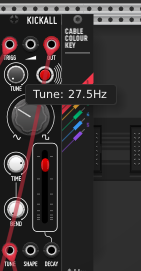
When no cv is going into “tune” the out frequency will be the same as the setting on the tune knob.
75.49 or 75.486 (which is the base frequency) (The tuned E string in Koens example)

When entering 1V into the tune input, it will double the frequency to 150Hz when entering -1V it will halve the frequency to 37.5Hz.
I loved this example until I realized that you can also enter negative voltages…(this does not work with a guitar…).
2 Likes
Yes Its funny how I until now saw tune as the finger on the guitar. Now i see it as the tuning keys and.
Earlier also what I meant with “eurorack language” was control voltage yes and on top of that to use VCAs and attenuators for modulation of different applications. I thought those would be the answer on my question on how to change one thing in relation to another (pitch>envelope-release>amplitute on mixer) which cubist guitar answered :
“Use an arranger style sequencer like PGMR or Arrange, send the cv outs to parameters you wanna work and get step control at the resolution of your arranger clock or manual advance to really have modular interactive time. If the switching in time is a bother hook up a trigger buffer like MLs and switch slightly early and let a divided clock quantize the manual changes.”
Well… the voltage is negative, not the tuning.
Lowering an open string is not possible unless someone invents an extendable string haha
You cannot turn the base frequency knob past its 0 point as well, it has a range.
Shortening a string with fingers is like applying positive voltage. So a guitarstring is only modulatable in the positive range.
And come to think of: there are some bowing techniques on string instruments where you can generate subharmonics. These would be negative voltages in the analogy.
2 Likes
Don’t fight it it was/is a very good example 

1 Like