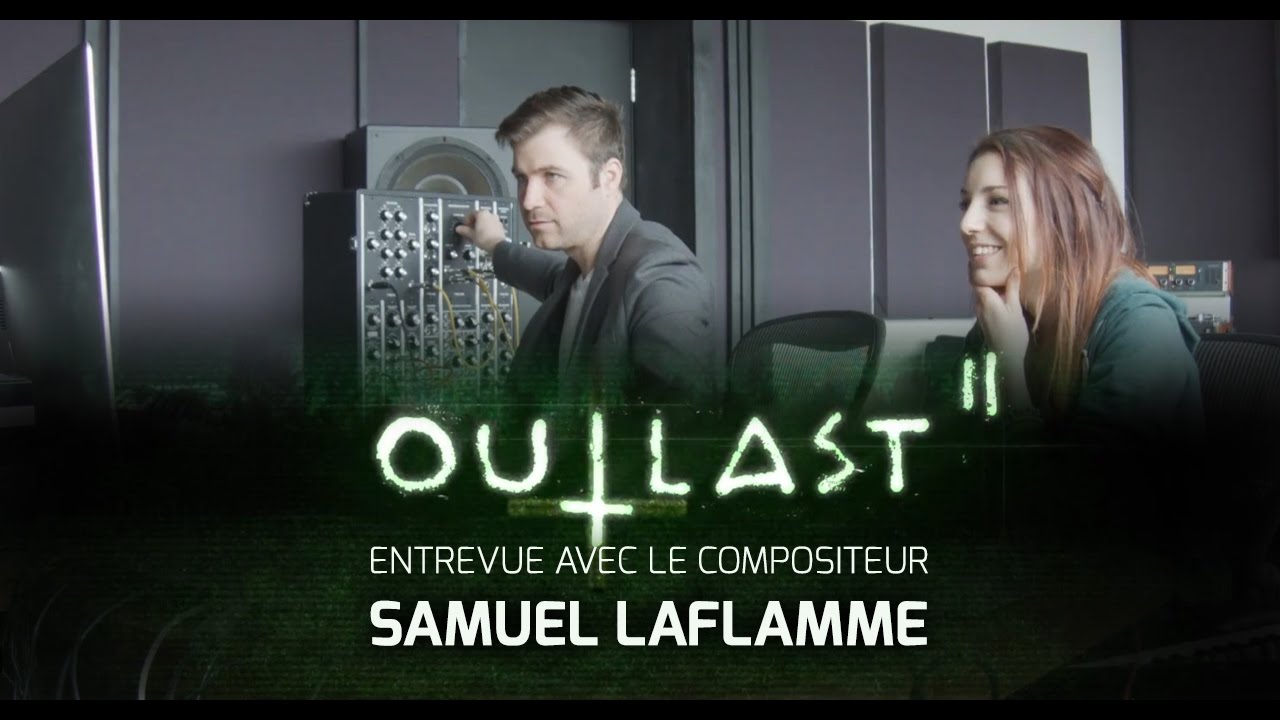
Some months ago, I read an interview with Samuel Laflamme, composer for the first two Outlast games. For the second game, he mentioned how he used “modular filtering” to mangle his sounds and do all kinds of crazy things. After watching Venus Theory’s video on VCV, I noticed audio inputs on the Audio8 module and I deduced that that’s what he meant: feeding an audio source/recording into an audio module and using the various modules to change the sound.
I’ve read on here there are samplers that you can load audio files into and I’m assuming use those as your sound source? But those posts were from 2021 so might very well be outdated information. Personally, if this is indeed what Laflamme meant when he said “modular filtering,” then I’d like to know more. Problem is I can’t find much on this topic. Anybody on here have experience doing this? Any insight on what his process might’ve been?
Lots of good sampler options! You can see them here, and anything that’s on the library should work with Rack 2. If you just want to get audio into Rack, and manipulate it with other modules, this is probably a good option:
As to “modular filtering,” I think he probably just meant “running audio through (probably Eurorack) filter modules.” The distinctive feature of these and their Rack counterparts is that multiple parameters can be changed at once. The bit of the soundtrack I just listened to (good stuff, by the way!) sounds to my ear like it has a fair bit of slow modulation of the center frequency and width of (probably) bandpass filters. I think that’s why the acoustic instruments sound like they’re constantly shifting and changing.
There are many incredible filters available for Rack. In your application I’d recommend starting with this one, which will give you a lot of options up front and goes very deep:
Load a sample, wire the sampler outputs to the Venom SVF inputs, wire the Band Pass outputs (for starters) to out on Audio 2, use a LFO (the VCV Fundamental one wlil do fine) and run a slow sine or triangle wave into the lower Cutoff input (with the little knob to the left adjusted so it’s not changing too much). Try moving the LFO to Spread, then Res, and hear how that changes. Then copy off another LFO or two (the huge advantage of software!) and target some combination. That’d be a good start for this kind of sound!
Then read the manual and think about what else you could do just with these few modules. The magic of modular!
You can also process live input through VCV, if you have any hardware gear you want to mangle. I do this with guitar, modular is so underrated as an effects processor!
The real benefit is the modulation, otherwise most Eurorack filters would be nothing special, just more expensive. Plus you can run as many filters as you want, (CPU permitting) and randomly or rhythmically modulating all of them at once. It’s basically an endless playground for sound design.
Right, so how does one go about doing that? I genuinely have absolutely no idea. If I’m reading this correctly, it’s not quite as simple as just plugging straight in and you’re off to the races?
Found the interview you were talking about. Personally, I’m not sure what he means by “modular filtering”, not confident he was referring specifically to modular synthesizers like VCV or Eurorack, although as others have mentioned, it is no bad place to start. Its not really a “wrong answer” so to speak. However, maybe you could ask him? He has his email listed on his website here. Maybe if you shoot him an email and ask him yourself he’ll tell you exactly what his process was for composing for the game. You never know!
If you look at the Audio 2 device which is included in the default patch, the lower two jacks are the inputs for VCV. If you have an interface with more than two inputs/outputs, use Audio-8 or 16. Those should carry the signal from the inputs on your hardware interface, you’ll need to connect it to a mixer module to route it back to the output for monitoring.
Not even joking, I did that earlier today and he’s already responded hahaha. Here’s the video link he sent showing him “filtering (thru my Moog modular).”
And it looks like the Moog he used in that vid has been documented online. Most interesting. My first instinct is to sorta kinda recreate something similar in VCV……
As you’ve probably seen already, the filter he’s twiddling is the iconic Moog 24dB/oct transistor-ladder lowpass. One characteristic of this design is that as you turn the resonance up it sucks the bass out; modern music production often uses a circuit revision to correct this, but I think it’s probably an important part of the filter sound here (it may be contributing to the eerie bandpass/thinning feeling).
Here are a few good (paid, but worth it) options that capture this characteristic (the first one, which has an expander called Filter+ that brings its feature set in line with the other two, is a direct model of the Moog; the other two are based on an OTA design, not a transistor design, but all are excellent). Lots of good free options too (just look for “lowpass” or “ladder” in the library). If you want the bass-thinning effect make sure anything called something like Bass Boost is turned off (it’s a right click option on the E440, for example).