I am not expecting any particular result, i am just curious to find out what will happen when combining 8 sinewaves applied in the fourier series and also to have moving envelopes.
Isao Tomita used 10 sinewaves and he simulated an entire orchestra with those. Mostly he used 3 oscillators from what i have heard.
That is only part of the info and therefore a bit misleading. For what I understand, he used a Moog synthesizer, a mellotron and effects. For a string orchestra he overdubbed the Moog many, many times. Still impressive of course (although it is not my cup of tea), but stating he only used 3 oscillators is a misleading oversimplification.
https://www.modwiggler.com/forum/viewtopic.php?t=288910

2 Likes
Hello Koen,
Yes thank you, overdub. That was my intent also. To overdub the oscillators. But before all that I woul like to try it completely in VCV before i go Hybrid. I tried 3 sinewaves and to modulate pitch and amplitude by hand and lfos sofar. What do you think would be a good controller for the sines in vcv rack?
I tried the nysthi phasor about 9 months ago after seeing it in a youtube video about additive in vcv rack. I could not get anything out from it but i will try again since I am somewhat less noobish now. 
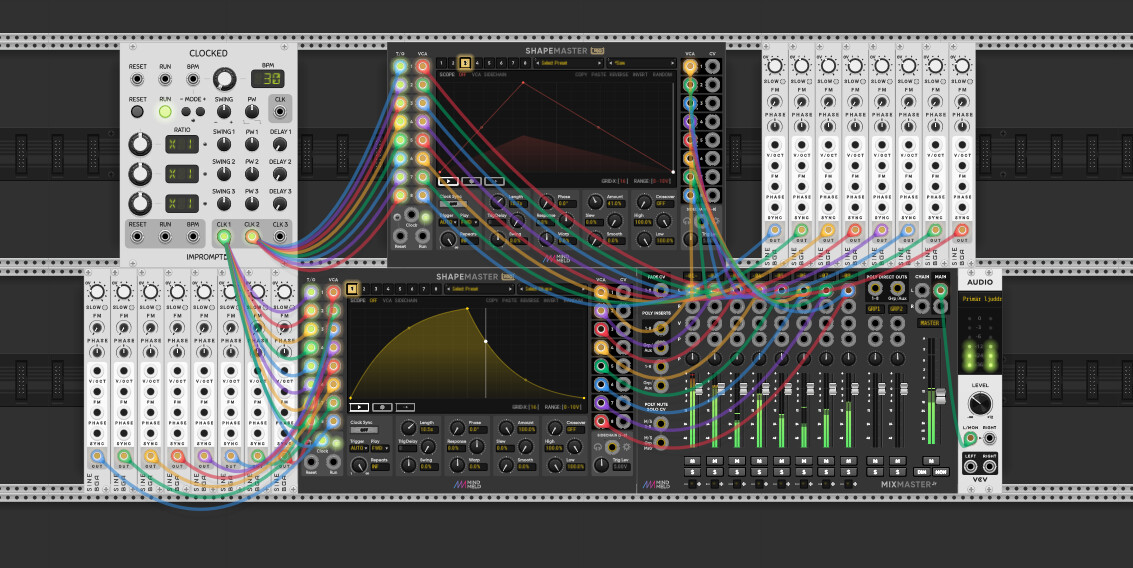
When I did this i sometimes heard the timbre i want to try and recreate. Which is the Erica Synth Black Wavetable VCO, when it does the “alien sweep” but since i dont know whats causing it, i cannot emphasize it stronger.
If you want to test more analogue sine oscillators for the additive technique, try these:
They are a great emulation done by Vult and sounding great.
For testing I mostly use:
Also by the same developer and very versatile (as they allow manual as well as cv via the 4 small inputs to a parameter)
1 Like
For a while I’ve been intrigued by the idea of using the Synthesizers.com collection to build an additive synth. I used the Signal Processor as a voltage multiplier. Here’s my test rig with a Switch to toggle between straight and processed signals;

Just needed to work out the voltages required(I only got to the first 9) but it’s just copied out 16 times, so here it is;
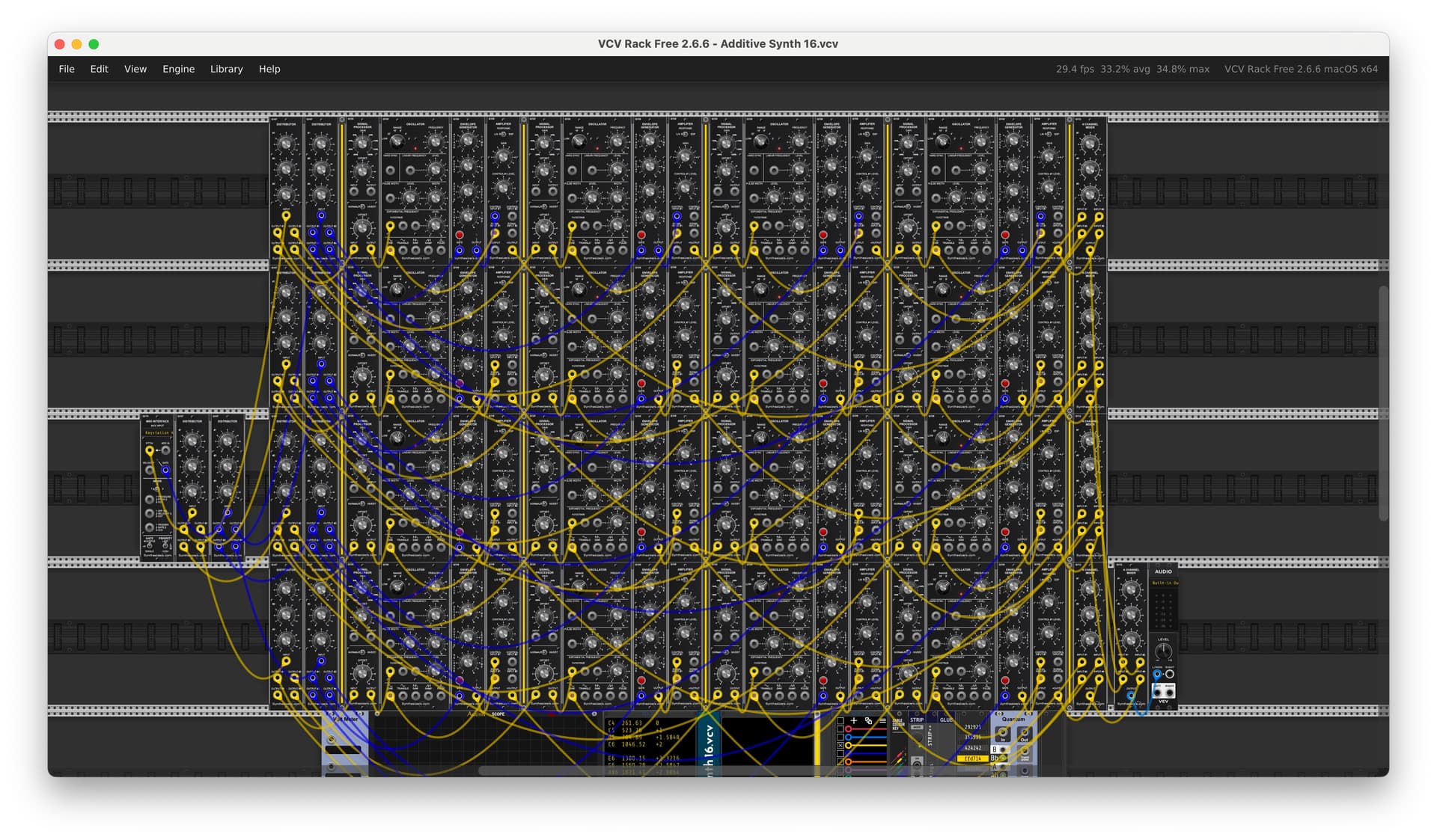
[EDIT] Adding the VCV Rack file;
Additive Synth 16.vcv (18.8 KB)
1 Like
Nice!
How does it sound?
I believe the oscillator is polyphonic, so you could merge the patch in that way.
It doesn’t sound right - I haven’t got the numbers right for the fundamentals, but the principal is there.
If you are curious about what can be achieved with pure and only Additive synthesis, maybe read this article on the Kawai K5 hardware synthesizer.
I still have my K5 and it taught me a lot about the fundamentals of sound.
It will give you some idea about how to approach Additive synthesis in a Modular environment.
Spoiler alert: things will go complex real quick from a useability point of view.
In its most basic form you will need to control the amplitude for each harmonic in the (dynamic)spectrum you want to recreate. Potentially needing multi sement envelopes that go beyond simple ADSR envelopes.
In effect it is the inverse of Fast Fourier Transform / spectrum analysis.
I’m happy to go way deeper into the subject if you want.
3 Likes
Reading
“Having four envelopes for the harmonic amplitude (in addition to the pitch, filter and overall level envelopes which most other synths would regard as more than complete),”
- does it have 4 envelopes per harmonic or 4 envelopes for all harmonics,
- i dont understand what the filter does whey you cannot filter a single sine wave?
“you can achieve this on the K5 using ‘Angle’, which attenuates one end of the harmonic series more than the other. If you give ‘Angle’ a positive value then the higher harmonics will be attenuated more” - very useful
“Although each sound on the K5 can be played over the full MIDI note range, you can tailor different patches to work best in a particular octave and then assign a different patch for each octave. Or you can layer many patches on one key.” 
“the invaluable ‘Compare/Recall’, which continuously allows you to check your progress when editing.” - also a favourite

Can we listen to “Big Time”? 
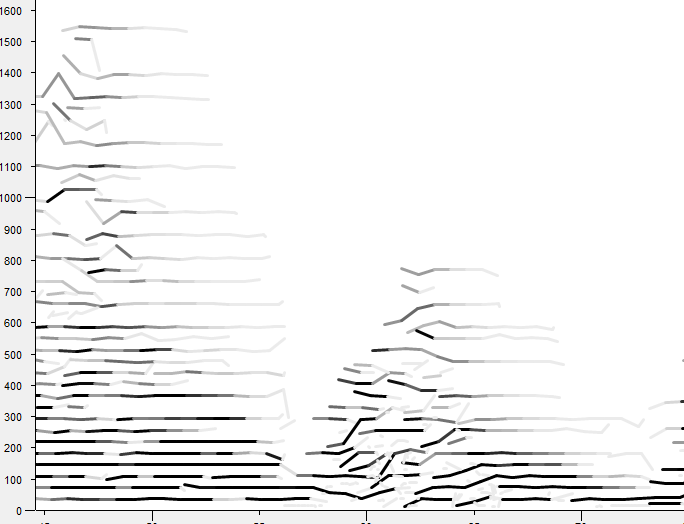
From an analasys in SPEAR I can see clearly that its when it plays the partials that are kinked that It creates more of the alien soundscapes
Hello Synthi,
I cannot find the manual for the phasor, I have difficulty to find manuals on Github due to their layout  Could you please direct me to where I can read it?
Manuals are not at all hard to find. If there are any, they are found at the “Info/User Manual” link in the module right click menu.
In the case of NYSTHI modules, there just aren’t any manuals.
2 Likes
The Kawai K5 had to work within the limits of compute power available in those days (1987). Its main processor is a NEC V30, comparable to the Intel 8086 CPU that powered the first Personal computer (IBM PC and clones). And it is only 8 bit. So…not much resolution for amplitudes and modulation amounts and the DAC is noisy (even at 1 of the 4 single sound outputs, but very much so at the 5th mixed main output). Also it lacks lack bass/punch. But there are many unique features that compensated for its weaknesses.
The purpose of sharing info on this almost 40 year old synth is mainly to demonstrate the concepts that were implemented in this hardware synthesizer. There have been and still are very few pure additive synthesizers. Very few even tried. Most notable the New England Digital Corporation Synclavier, Kurzweil K150 and off course the epic Fairlight CMI. Kawai retried many years later with the hybrid Kawai K5000.
Anyway.
It has 4 envelopes as modulation sources for all harmonics. So, you can not control each harmonic with its own envelope. You can map the amplitude of each harmonic to 1 (or none) of 4 envelopes.
Ideally each frequency/harmonic in the spectrum would have its own envelope. But that would mean you would need to program up to 126 envelopes. A challenge, even in modern GUI based interfaces, but hardly an option when editing via a miniscule LCD screen and a handfull of knobs and a data entry wheel. And…it would require more compute that was pretty limited in those days.
You filter the spectrum, consisting of all harmonics (sines) that have an amplitude greater then 0. In this additive approach all filtering can be seen as manipulations of the (relative) amplitudes of each of the harmonics. In effect via an amplitude curve/contour over the spectrum. The shape that you ‘draw’ is simply the relative attenuation of the amplitudes of underlying harmonics. Top of the contour is 100% amplitude, bottom is 0% (silent). This way the filter angles and depths are pretty variable. It can go so steep it will pass only a single harmonic (filter curve/contour then looks like a narrow spike). Same goes for the ‘formant’ filter and the keytracking ‘angle’ which is effectively a tilt filter. They will simply subtract some amplitude wherever the curve is below 100% amplitude. And yes, with only 8-bits of resolution this approach has its limits.
You can use 2 x 63 harmonics or 1 x 126 harmonics. There are various keytracked modulation sources. And there is a multimode where you can layer up to 15 sounds.
There’s a lot of potential. Especially considering in the time it was introduced (4 years after the Yamaha DX7 en just before everything went digital).
Here’s a demo of the sorts of sounds it can produce. Some of them not really achieveable via other synthesis techniques. From cheesy blips and pings and DX7-FM-ish clangerous sounds to analog-ish subtractive warm strings and pads.

3 Likes
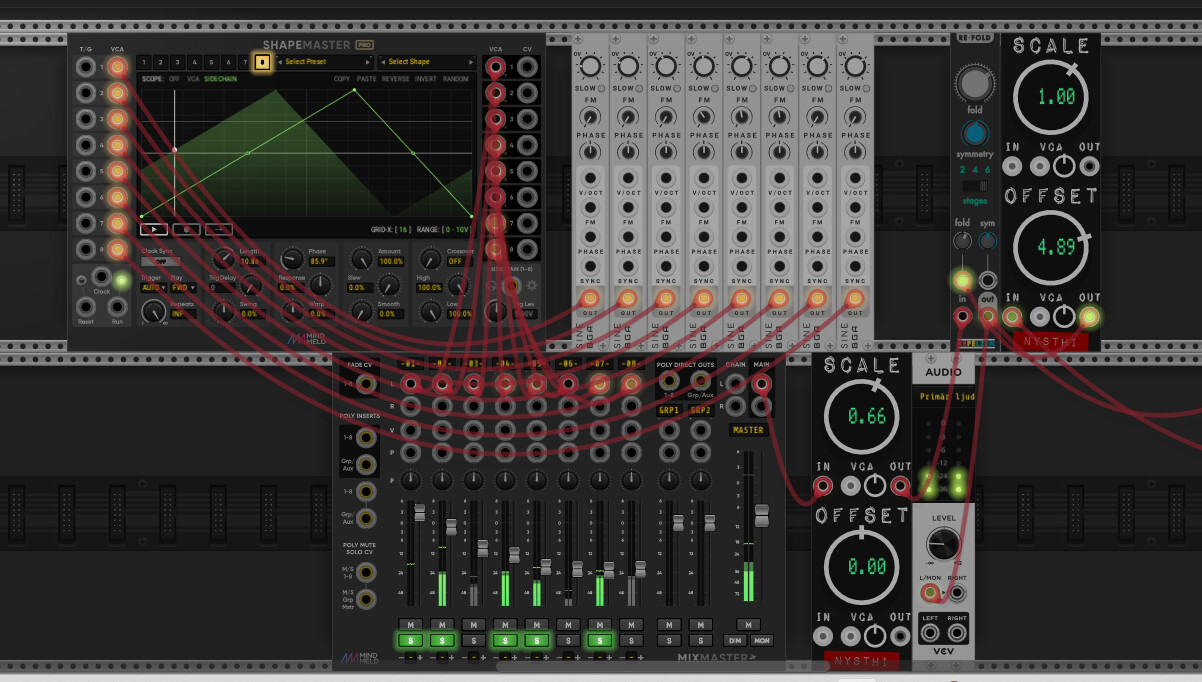
Mostly 4 sines into a wavefolder for the alien drones. I low pitch to the left in the mixer and then it increases to the left. The mixer also can act as a kind of envelope which i can see and adjust from the mixer. Also turning of mixer channels lets me single out sines that are to dissonant, and so i can tune to a consonant-dissonant. And audition the “bad” sine against different combinations of other ones.
1 Like